

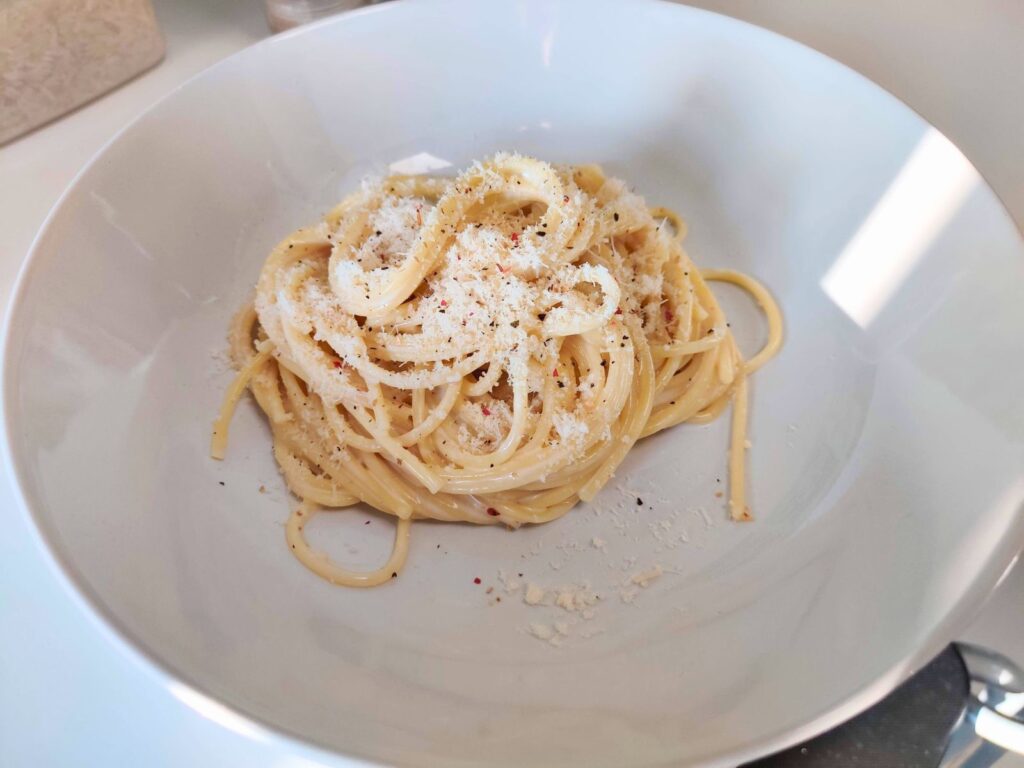
An authentic cacio e pepe can really impress when done right, but getting that's a lot easier said than done. While cacio e pepe is a simple Italian recipe with just a handful of ingredients, showcasing Italian cuisine's simplicity, it's the technique that defines whether you'll get it right or whether it'll turn out clumpy.
The open secret of Italian food is that it should be simple, relying on only a few high-quality ingredients. The secret of a cacio e pepe, however, is in the technique - specifically emulsifying the cheese so that it doesn't turn out clumpy. It's by far and large one of the biggest complaints of home cooks around the world, so how do you avoid clumps in your cacio e pepe and make it smooth and nicely emulsified?
That's exactly what I've looked into, having clumped it up several times myself until finally getting it right. I've tried using a blender, adding butter or olive oil, but it kept clumping up. Tasty? Sure. Done the proper way? No, so back to the drawing board.
What ended up actually working for getting a nicely emulsified cheese sauce was using very starchy pasta water and introducing the cheese to just enough heat to work it in without getting it to break. That sticky film at the bottom of your pan? It means you've pushed that Pecorino Romano a little too far, and it's very sensitive to heat.
Interestingly, several physicists researched how to make the perfect pasta in 2025, specifically cacio e pepe. The trick to getting the proper consistency and emulsion is using the right quantities of starch to cheese ratio, specifically 2%-3% starch to cheese by weight. Furthermore, a high starch concentration keeps it stable at high temperatures, but that amount of starch is not common in home cooking. Moreover, something tells me nonna wasn't consulting scientific research papers on cacio e pepe and just did things by feel.
This recipe is aiming to be authentic, not the "scientifically proven" best way to emulsify the sauce. In any case, there are some useful takeaways here. Firstly, below 65°C, fewer clumps will occur overall (regardless of starch). Temperature is the number one factor regarding clumpiness. Secondly, concentrating the starch in the pasta water is something you can control. Boiling the pasta in a smaller volume of water concentrates the starch, so even if you mess up with the temperature a little, your pasta water's starch content can help rescue a sauce that's breaking.
A traditional cacio e pepe should only use the following ingredients, plus a little bit of salt for the pasta water:
Butter, olive oil, and various other ingredients can all make this dish a lot easier with regards to emulsification or for toasting the pepper for longer - all excellent twists on this dish. But here I'm trying to go for an authentic recipe, so none of those ingredients are needed for this recipe.
Cheese proteins react to heat in different ways, depending on the cheese. Pecorino is a very salty and dry-aged cheese. It wants to turn into long strands or a film on the bottom of the pan, and heating it further past its breaking point only tightens the protein bonds and makes the overall sauce clumpier. The trick is to control your temperature well.
Cooking the pasta in one pot (or better, a deep frying pan) and using a separate pan to toast the pepper and toss the drained pasta gives you much greater control over the temperature, helping to ensure you don't hit the breaking point of your fragile Pecorino.
Starchy pasta water should be warm or a little hot, but not boiling, when introduced to the cheese. Pouring in a little at a time and mixing as you go helps you get the texture just right. If the water is starchy enough, it ought to help keep the sauce emulsified well enough to stick to the pasta.
A classic Roman pasta dish featuring just three ingredients: pasta, cheese, and cracked black pepper. Despite this, getting a cacio e pepe without clumps can be quite difficult, but our recipe shows you techniques to get a silky, emulsified sauce that is sure to please. Ready in about 20 minutes and for a great price.
In a deep frying pan or pot, cook pasta in just enough lightly salted water to cover. Cook until 1-2 minutes before al dente. Drain and reserve about 2 cups of drained pasta water.
In a bowl, mix the cheese with a few spoons of pasta water until a thick paste forms.
In a separate frying pan, toast black pepper over medium heat for about 1-2 minutes, until fragrant.
Off heat, combine pasta with toasted black pepper.
Gradually mix the cheese paste with the pasta, combining with a fork or tongs. Gradually add more pasta water, a little at a time, until the sauce becomes glossy and adheres to the pasta.
Serve immediately and add extra cheese and cracked black pepper to taste.
Howdy and greetings from Portugal :) I hope you found this recipe to be inspiring and - most importantly - tasty! If you enjoyed it, don't hesitate to tell me what you thought of it.