


Hello again there, folks. One of the easiest and most helpful sauces you can learn to make at home is béchamel sauce, or as it's often called in English, white sauce.
Béchamel sauce is a white sauce made with a white roux and milk or cream. It is one of the five French sauces mères, or mother sauces, and perhaps the easiest and most useful to learn.
It was recorded as such by Auguste Escoffier in 1903. It predated him and was included in his great work, Le guide culinaire, and is still an extremely common mother sauce today. It's believed that the sauce was named after Louis de Béchameil, chief steward to King Louis XIV of France.
Béchamel builds upon the fundamental roux to create a silky smooth white sauce. It is either used in recipes as-is or as the base for its derivative sauces.
A béchamel sauce is nothing more than a white roux with milk/cream whisked in and (optionally) herbs and seasonings:
What can't you do with a good béchamel? It's a flexible sauce that can be used for many lovely dishes, such as:
and for building derivative sauces and recipes such as:
For an authentic béchamel, the key is getting the proportions right. Classic béchamel uses a 1:1:10 ratio of butter to flour to milk, by weight. It doesn't need to be perfect, but the closer you stay to that ratio, the better the result.
Assume you're always using the same quantity of milk. If you want a thin béchamel, use a little less flour and butter. If you want a thick béchamel, use a little more of each. If you want to make a soufflé, use roughly double the flour and butter.
The biggest bugbear to home cooks making béchamel is, undoubtedly, whether or not the milk should be cold or warm when mixing into the roux. Both can work.
Cold milk can mix well into a hot roux. This saves you time at first, but then you need to bring the béchamel up to a boil and it will take longer.
Warm milk can mix well into a roux that's cooled down a little. This is the original technique by Escoffier and French culinary schools. It saves you time boiling the béchamel, but you need to wait for the roux to cool down a little.
You're less likely to get a lumpy sauce if you do either of the above. But perhaps more importantly, you can avoid lumps with a few quick tips.
Firstly, only pour a little milk into the roux at first, whisking constantly. Once it's had time to thicken up a bit, pour in a little more. You can do it in halves or however you like, but gradual pouring lessens the risk of lumps whereas dumping it all in at once will surely give you a lumpy sauce.
Secondly, bring your béchamel up to a boil slowly. Turn the dial on your hob a little at a time every minute or two rather than cranking it to maximum heat.
Lastly, you only want to boil the béchamel for a couple of minutes. Leaving it on for too long can burn it, leading to curdling (especially with milk béchamel). You only want to boil it long enough that the flour cooks out fully.
Béchamel is one of the five classic French mother sauces, and it just so happens to be the most versatile and easy to make. All you need to know is how to make a white roux and combine it with milk or cream. This recipe will show you how to build a velvety smooth béchamel sauce.
(Optional): Slice the onion in half and peel. Insert cloves into the round surface of the onion.
In a medium-sized saucepan, melt butter over medium-low heat.
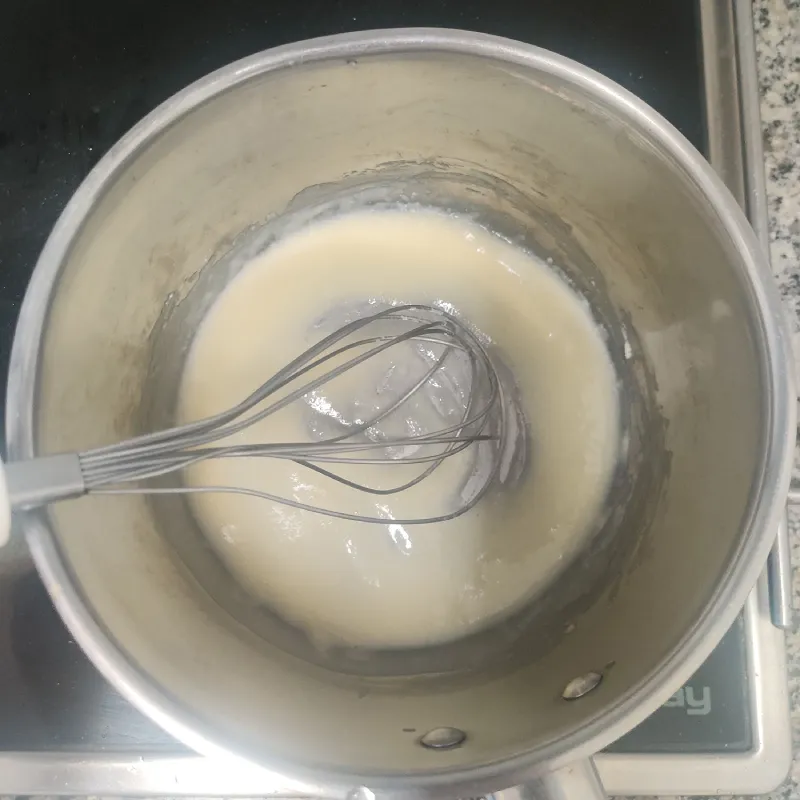
Sprinkle flour over the butter and whisk continuously for 2-3 minutes, then remove from heat.
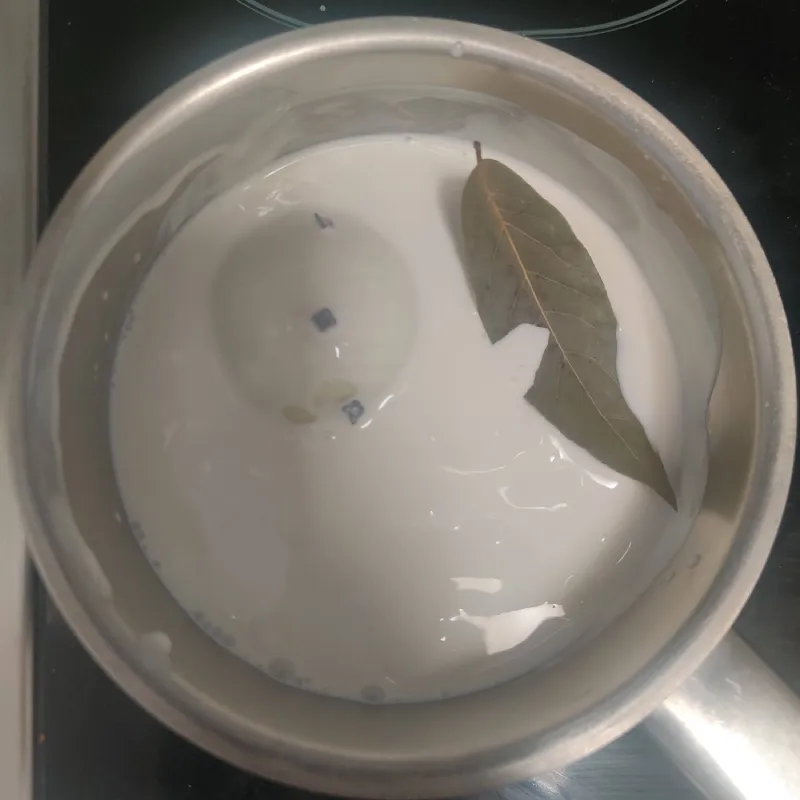
In a separate medium-sized saucepan, add all milk/cream and all herbs and seasonings. Slowly and gradually, bring to a boil, stirring occasionally.
When the milk comes to a boil, remove from heat and remove the onion and bay leaf. Pour a little into the roux, whisking constantly. The milk will thicken considerably.
Gradually whisk in more milk, repeating until all milk has been added and incorporated with the roux.
Gradually increase heat to slowly bring the béchamel to a boil. Stir/whisk frequently.

Boil for approximately 2 minutes, whisking/stirring especially along the bottom of the pan, then remove from heat. Adjust seasoning as necessary.
Use immediately, or allow to cool for about 15 minutes before placing in an airtight container in the refrigerator.
Howdy and greetings from Portugal :) I hope you found this recipe to be inspiring and - most importantly - tasty! If you enjoyed it, don't hesitate to tell me what you thought of it.