
Hello again there, folks. One of the easiest and most helpful sauces you can learn to make at home is béchamel sauce, or as it’s often called in English, white sauce.
What is béchamel sauce?
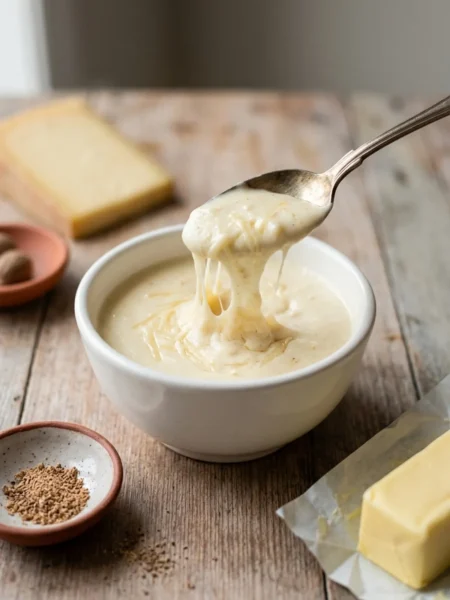
Béchamel sauce is a white sauce made with a white roux and milk or cream. It is one of the five French sauces mères, or mother sauces, and perhaps the easiest and most useful to learn.
It was recorded as such by Auguste Escoffier in 1903. It predated him and was included in his great work, Le guide culinaire, and is still an extremely common mother sauce today. It’s believed that the sauce was named after Louis de Béchameil, chief steward to King Louis XIV of France.


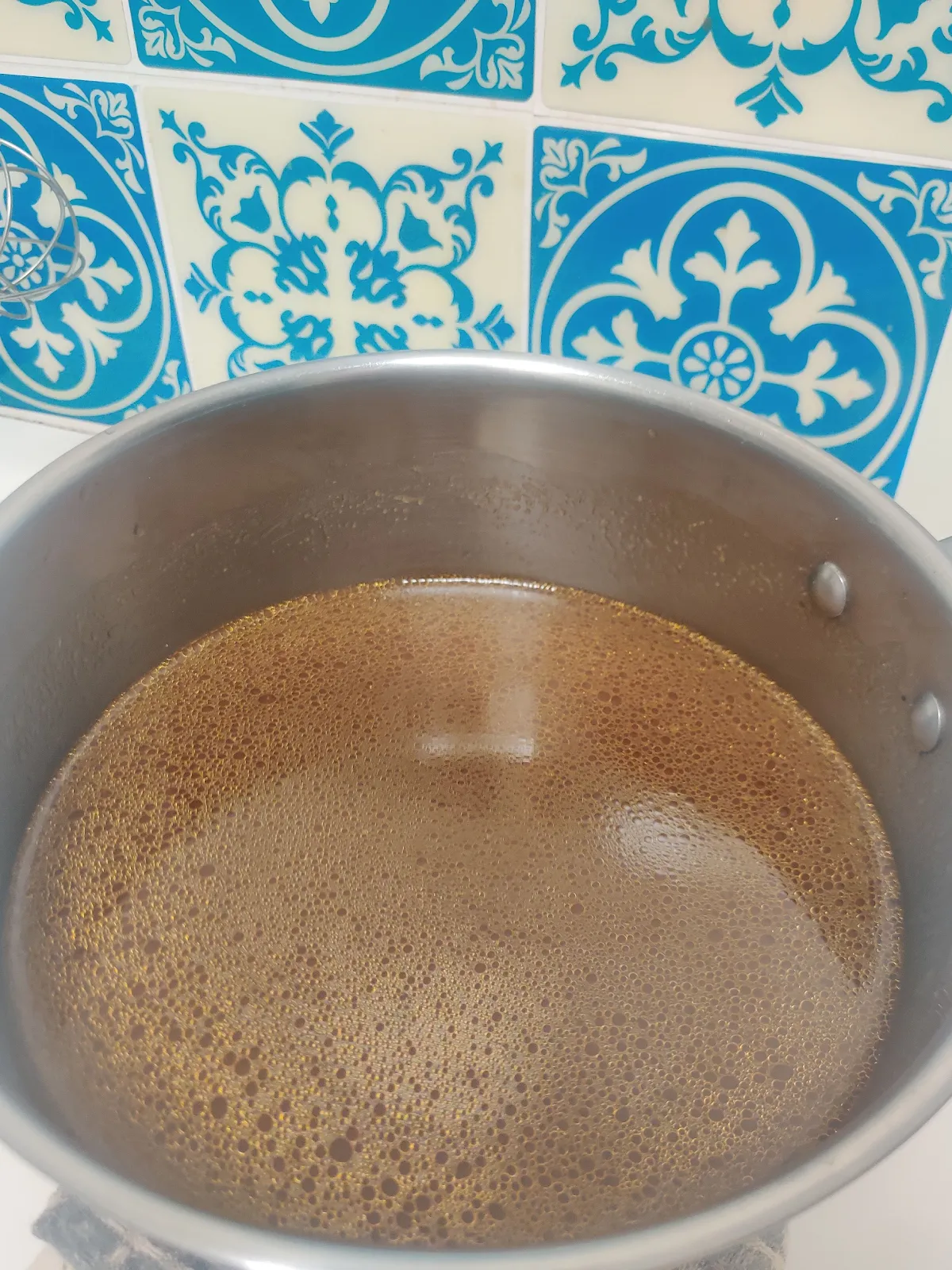


Béchamel builds upon the fundamental roux to create a silky smooth white sauce. It is either used in recipes as-is or as the base for its derivative sauces.
Ingredients in béchamel sauce
A béchamel sauce is nothing more than a white roux with milk/cream whisked in and (optionally) herbs and seasonings:
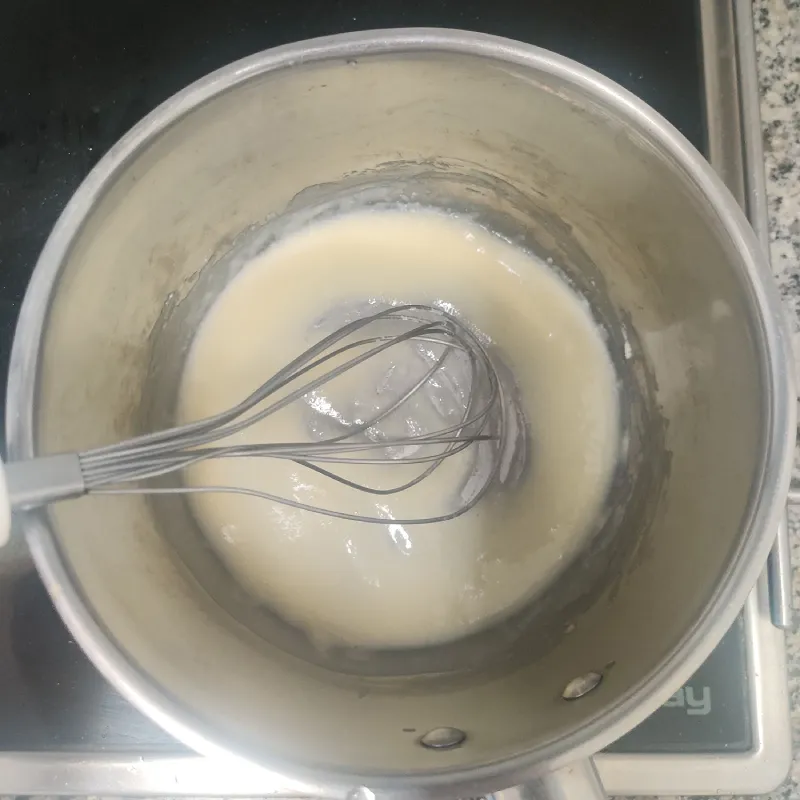
- Roux: béchamel starts with a flour and butter roux, cooked briefly to the white roux stage. The point is to only cook off the flour, without discolouring the roux and leaving it with maximum thickening power.
- Milk/Cream: either milk or cream can be added to the roux to create the béchamel. Milk is more common nowadays and creates a silky sauce, but cream can help make the sauce thicker and more velvety in texture. Historically, Escoffier’s recipe used milk. Technically, adding cream makes a derivative, sauce crème, but today both are common.
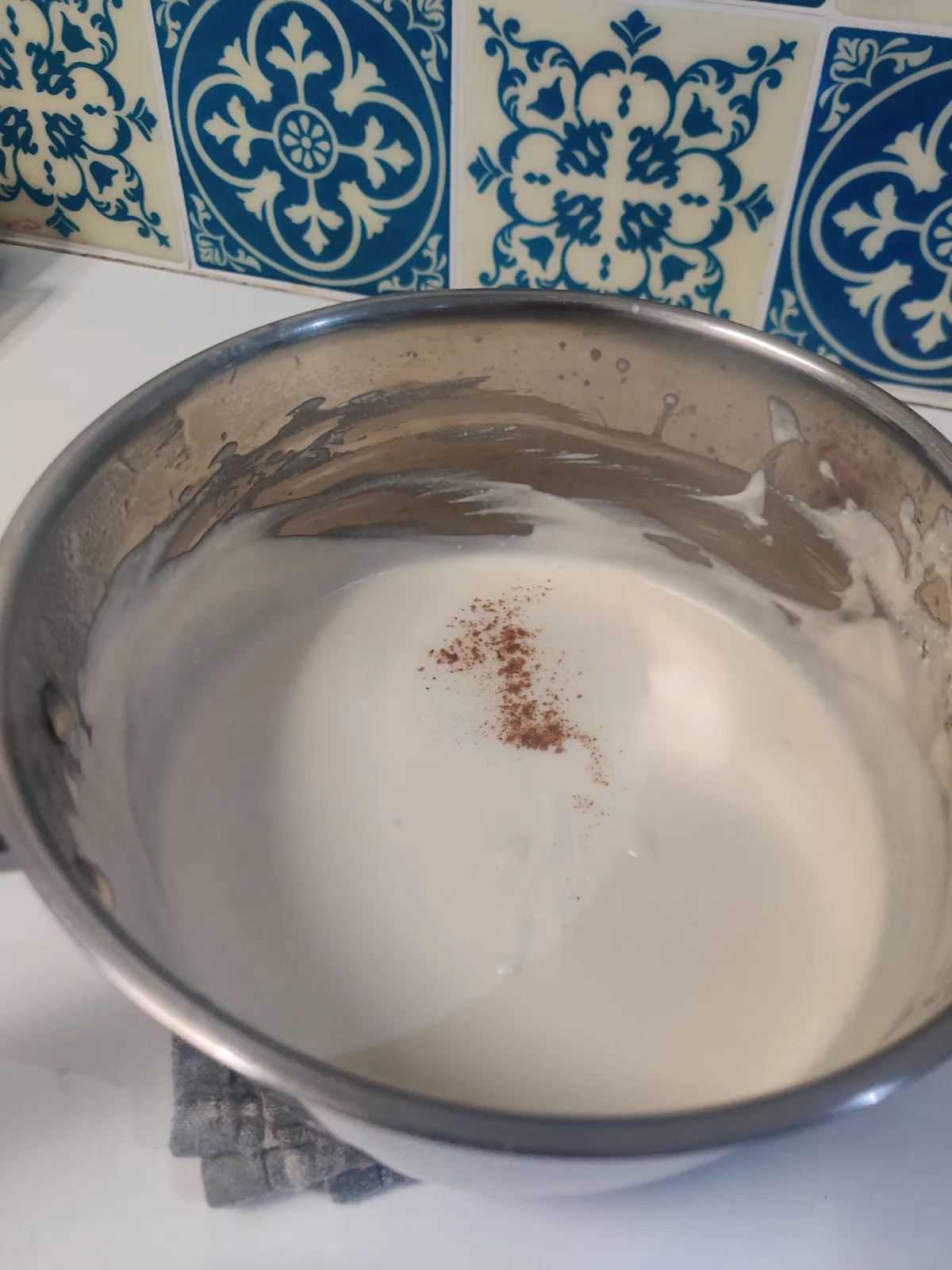
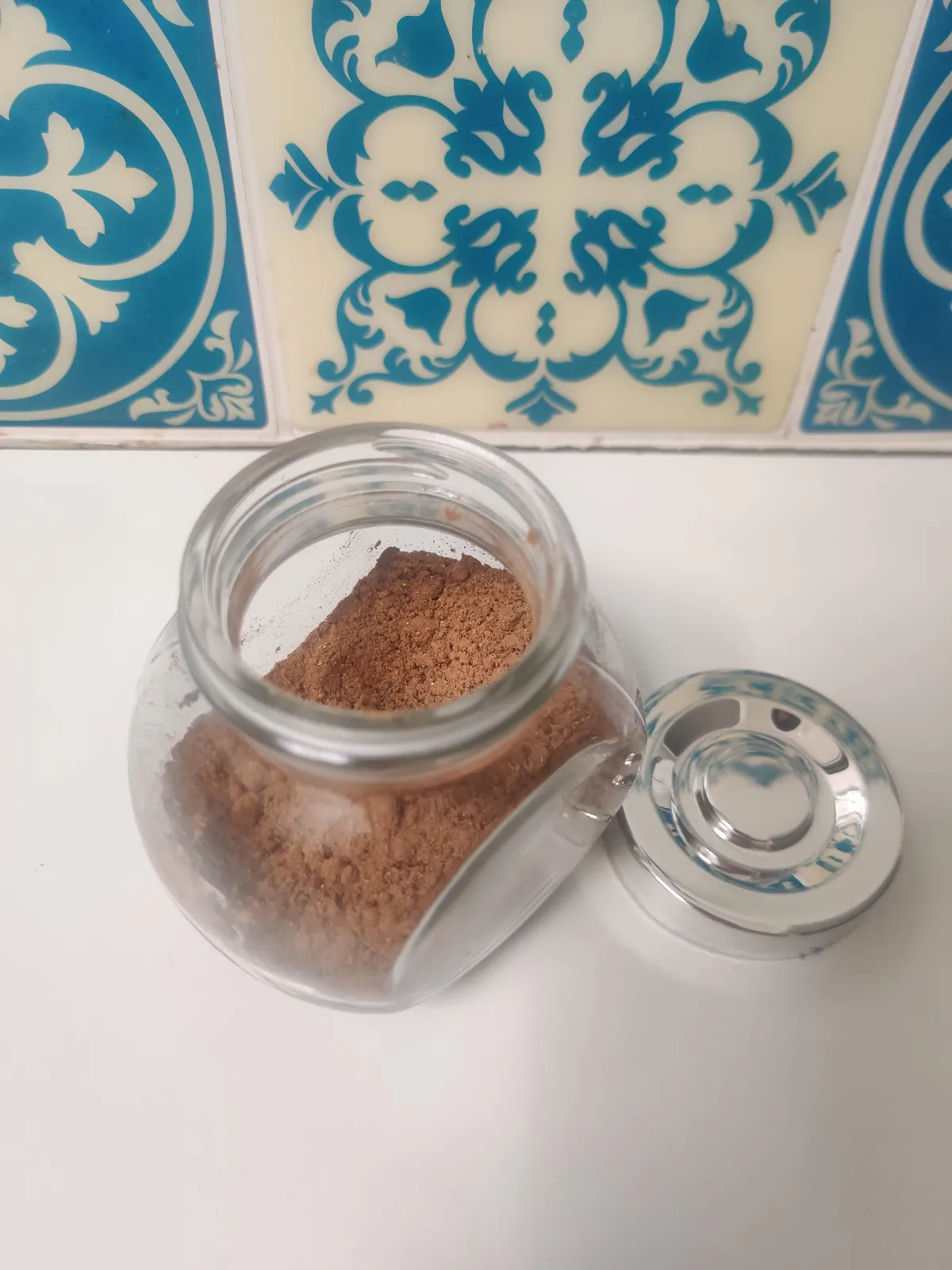
- Herbs & Seasonings: traditionally, béchamel has a touch of nutmeg. Salt, pepper (usually white pepper), bay leaves, thyme, and/or parsley are also common. An onion studded with whole cloves can also add a lovely flavour while simmering.
What can I make with béchamel sauce?
What can’t you do with a good béchamel? It’s a flexible sauce that can be used for many lovely dishes, such as:
- Lasagne alla Bolognese
- Cannelloni
- Moussaka
- Pastitsio
- Croquetas
- Belgian Endive Gratin (Witloof)
and for building derivative sauces and recipes such as:
- Sauce Mornay: Croque Monsieur, macaroni cheese
- Sauce Aurore: poached eggs, poached chicken breast
- Sauce Soubise: baked eggs, roasted lamb chops
- Sauce Nantua: quenelles de brochet, vol-au-vent
- Sauce Crème: poached chicken breast, vol-au-vent
- Sauce Moutarde: grilled pork chops, braised rabbit
- Parsley Sauce: boiled gammon, poached smoked haddock
- Cheddar Sauce: fish pie, jacket potatoes
Tips & tricks for homemade béchamel sauce
For an authentic béchamel, the key is getting the proportions right. Classic béchamel uses a 1:1:10 ratio of butter to flour to milk, by weight. It doesn’t need to be perfect, but the closer you stay to that ratio, the better the result.
Assume you’re always using the same quantity of milk. If you want a thin béchamel, use a little less flour and butter. If you want a thick béchamel, use a little more of each. If you want to make a soufflé, use roughly double the flour and butter.
The biggest bugbear to home cooks making béchamel is, undoubtedly, whether or not the milk should be cold or warm when mixing into the roux. Both can work.
Cold milk can mix well into a hot roux. This saves you time at first, but then you need to bring the béchamel up to a boil and it will take longer.
Warm milk can mix well into a roux that’s cooled down a little. This is the original technique by Escoffier and French culinary schools. It saves you time boiling the béchamel, but you need to wait for the roux to cool down a little.
You’re less likely to get a lumpy sauce if you do either of the above. But perhaps more importantly, you can avoid lumps with a few quick tips.
Firstly, only pour a little milk into the roux at first, whisking constantly. Once it’s had time to thicken up a bit, pour in a little more. You can do it in halves or however you like, but gradual pouring lessens the risk of lumps whereas dumping it all in at once will surely give you a lumpy sauce.
Secondly, bring your béchamel up to a boil slowly. Turn the dial on your hob a little at a time every minute or two rather than cranking it to maximum heat.
Lastly, you only want to boil the béchamel for a couple of minutes. Leaving it on for too long can burn it, leading to curdling (especially with milk béchamel). You only want to boil it long enough that the flour cooks out fully.

Description
Béchamel is one of the five classic French mother sauces, and it just so happens to be the most versatile and easy to make. All you need to know is how to make a white roux and combine it with milk or cream. This recipe will show you how to build a velvety smooth béchamel sauce.
Ingredients
Béchamel
Herbs & Seasonings (optional)
Instructions
Mise en Place
-
(Optional): Slice the onion in half and peel. Insert cloves into the round surface of the onion.
Making the Roux
-
In a medium-sized saucepan, melt butter over medium-low heat.
-
Sprinkle flour over the butter and whisk continuously for 2-3 minutes, then remove from heat.
Making the Béchamel
-
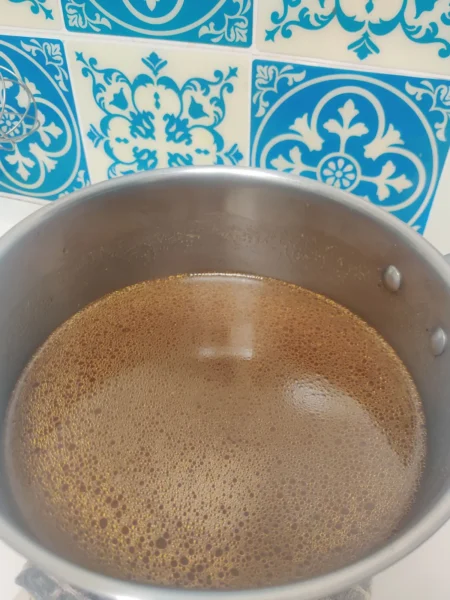
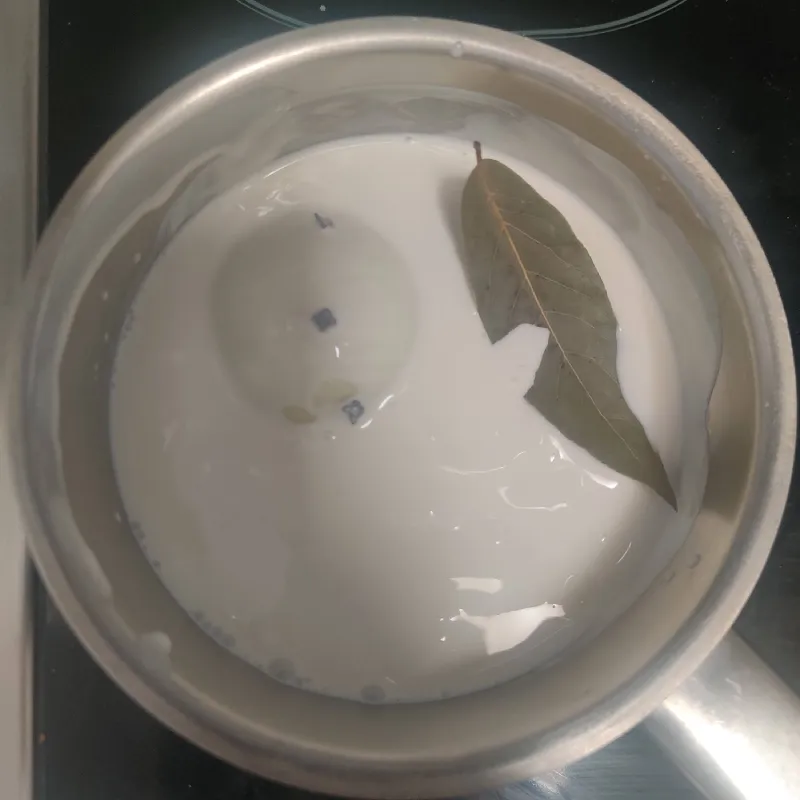
In a separate medium-sized saucepan, add all milk/cream and all herbs and seasonings. Slowly and gradually, bring to a boil, stirring occasionally.
-
When the milk comes to a boil, remove from heat and remove the onion and bay leaf. Pour a little into the roux, whisking constantly. The milk will thicken considerably.
-
Gradually whisk in more milk, repeating until all milk has been added and incorporated with the roux.
-
Gradually increase heat to slowly bring the béchamel to a boil. Stir/whisk frequently.
-
Boil for approximately 2 minutes, whisking/stirring especially along the bottom of the pan, then remove from heat. Adjust seasoning as necessary.

-
Use immediately, or allow to cool for about 15 minutes before placing in an airtight container in the refrigerator.
Note
- Storage: can be stored in the refrigerator in an airtight container for up to 5 days. Can be frozen for up to 3 months, but be warned that it will separate and the texture will not be the same as fresh or refrigerated.
- Yield: this recipe should yield a little under 500mL of béchamel sauce. It will simmer, but not long enough to reduce by very much. Adjust quantities as necessary and keep to the 1:1:10 ratio of flour to butter to milk, by weight, for a velvety béchamel.
- Clumping: either pour the warm milk into a cooled roux, or pour cold milk into a hot roux. Either way, always pour a little at a time, whisking constantly. Bring the béchamel to a boil slowly and don't overboil.