
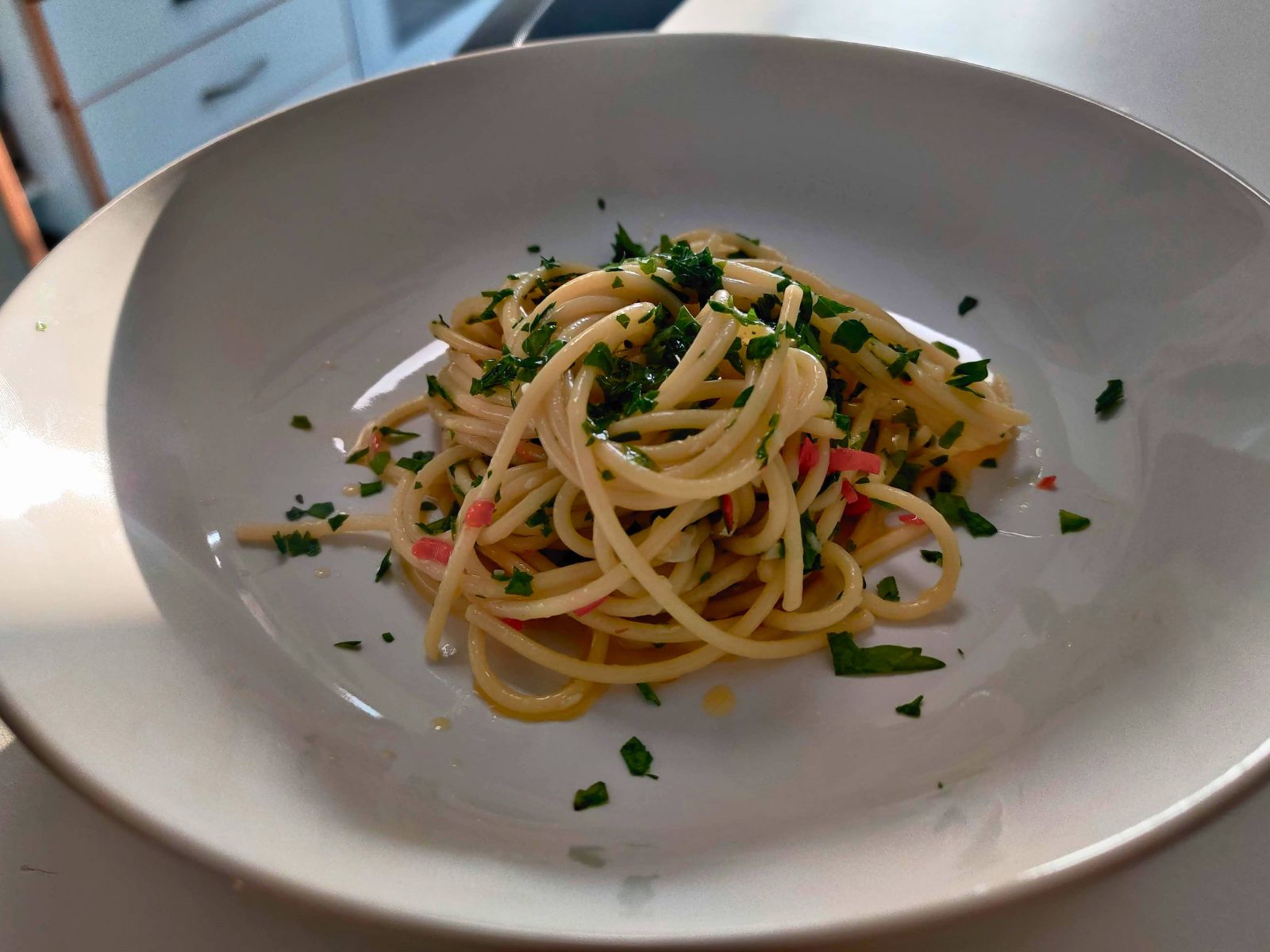

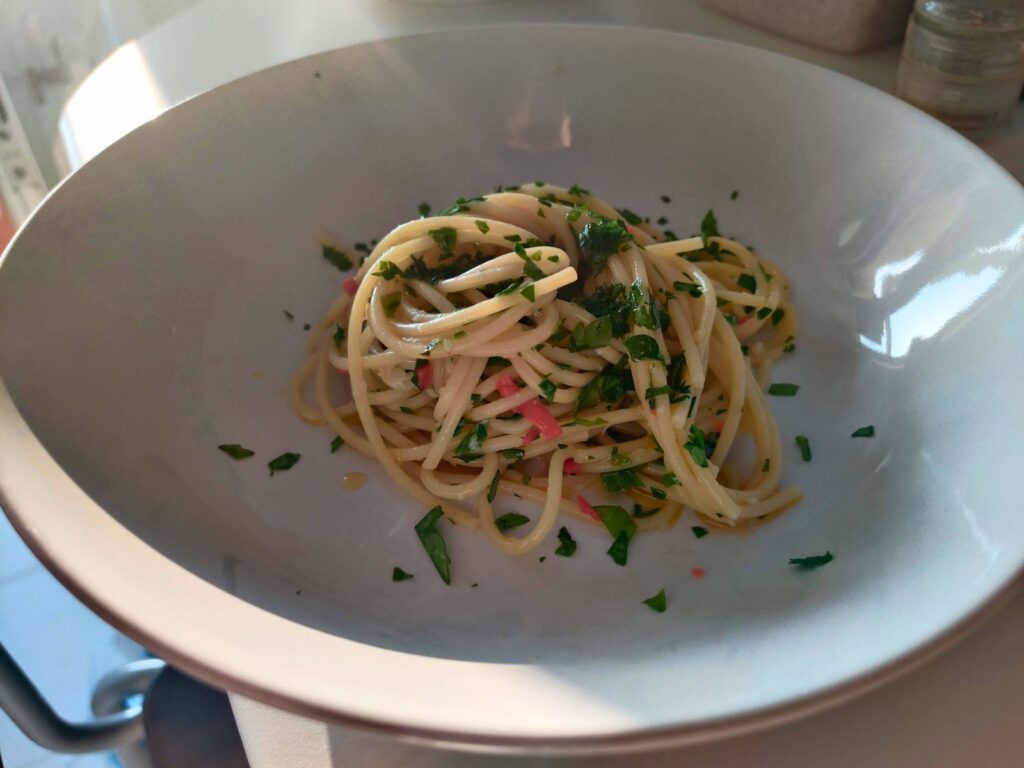
The raw simplicity of a spaghetti aglio, olio e peperoncino (spaghetti with garlic, oil, and chilli flakes) is a testament to the simplicity of Italian cuisine.
With its focus on just a handful of quality ingredients – most of which are readily available – this dish is sure to be a hit with your family.
It’s also a great opportunity to hone down your home cooking skills, because this recipe does call for good technique in order to turn out well.


Simple food, done right: why spaghetti aglio, olio e peperoncino is a staple dish
Naples and Southern Italy are truly wonderful places for many reasons, and cuisine is amongst those reasons why you should visit. Spaghetti aglio, olio e peperoncino was born in this region and, like many dishes, has its humble roots in poorer households where perhaps meat and dairy were treated as little luxuries.
That’s why its ingredients are simple things most homes have on hand already: spaghetti, olive oil, chilli peppers, and parsley.
This recipe is fully inspired by the wonderful Italia Squisita and their recipe: Aglio e Olio: Original vs. Black Garlic vs. Roasted Garlic with Luciano Monosilio.
While you don’t need to be a master chef to make this, I found that his technique makes for a wonderful dish that’s true to the original with only a few tiny (but sensible) adjustments. Of course, it’s a great dish for those on a tight budget, too.
Why technique is essential for this recipe
Don’t be too misled by the simplicity of the ingredients in this recipe. It’s a test of a home cook’s expertise, and getting the technique right will give you a dish to be proud of. Get it wrong, however, and you could end up with burnt garlic or a sauce that’s either too dry or too oily.
For a good spaghetti aglio, olio e peperoncino, you’re going to have to gently infuse your garlic so that its toasted, nutty flavour really shines through. Again, there are only a handful of ingredients and flavours, with garlic being the most pronounced, so getting it just right is critical.
Furthermore, you’ll want to emulsify your oil with pasta water so that it comes out glossy and beautiful.
What type of chilli flakes work best in spaghetti aglio, olio e peperoncino?
The traditional chilli flakes used in spaghetti aglio, olio e peperoncino are usually some type of Calabrian chilli (Capsicum annuum), so use these if they are available to you.
The best chillies I can find near me are malaguetas (Capsicum frutescens), which are quite hot and have less of a smoky flavour. Just use whichever you have available. When I make this dish, I slice the chillies finely and use both the seeds and the rest of the pepper.
If you’re sensitive to heat, then either tone it down to your liking or simply make Spaghetti Aglio e Olio instead and hold off on the peperoncino altogether.
This simpler recipe still packs plenty of flavour thanks to the garlic, but if you like spicy (like I do), then this version will be more to your liking.
Notes on the ingredients for spaghetti aglio, olio e peperoncino
- Spaghetti: while the dish calls for spaghetti, similar types of pasta are perfectly fine. Spaghettoni, bucatini, and linguine are all excellent alternatives.
- Garlic (aglio): the traditional recipe usually calls for 4-8 cloves of garlic, sliced thinly (think of Uncle Paulie in Goodfellas slicing it with a razor in prison, but a tad thicker!). Chef Monosilio’s approach is a lovely twist: he removes the germ from the garlic clove, crushes it, slices it thinly, then turns it into a paste that fully blends in with the sauce.
- Olive oil (olio d’oliva): since garlic-infused olive oil is the base of the sauce, you really should be using some of the best extra virgin olive oil you can find. Doesn’t have to be the most expensive, but do try to use a good quality olive oil. If it tastes good enough on a piece of bread, go ahead and use it.
- Chilli flakes (peperoncino): as mentioned above, Calabrian chillies are usually what you’ll find in an Italian peperoncino at most restaurants on the table or in recipes like this. This might be the only tricky ingredient simply not available in your region, so by all means, use your preferred chilli flakes and use as little or as much as you can tolerate.
- Parsley: optional, but a great touch for decorating and for flavour. Following chef Monosilio’s recipe, I’ve become quite fond of using the bitter woody parsley stalks to infuse in the garlic and oil rather than just discarding them.
Common mistakes when making this dish
With so few ingredients, you might be mistaken in thinking that this dish is easy. Here are a few common mistakes when making a spaghetti aglio, olio e peperoncino:
- Burnt garlic: you’ll need to simmer the garlic for about 10 minutes, just enough so that it turns a lightly golden brown but not so much that it burns and ruins the whole dish. Use a medium-low heat and consider cooking in not just the olive oil but also a ladle of pasta water.
- Sauce too dry/oily: add pasta water, little by little, until the sauce is somewhat emulsified. It’ll thin it out a little more so that it’s more to your liking.
- Sauce doesn’t adhere to the pasta: one tip is to use pre-cooked pasta stored in a refrigerator. The consistency of the pasta’s starch changes and it’s a lot better at adhering to sauces. To stick to this recipe, however, use a good blend of pasta water and olive oil (2:1 ratio of water to olive oil for good emulsion) until the consistency is good enough to stick.
- Parsley feels too damp: as shown in the video (link above), chef Monosilio recommends using dry, finely julienned fresh parsley. Chopping finely helps keep it dry and helps its flavour pop more.
- Not salting your pasta water: generously salt your water when boiling your pasta. This helps it retain more of an al dente texture and brings out some flavour from the pasta.
✅ Pro tip: save the stalks of your chopped parsley and add to the garlic and olive oil sauce whilst simmering to release their flavour. Discard the stalks before combining with the pasta.

Description
Southern Italian classic built on just a handful of quality ingredients: spaghetti, garlic, olive oil, chilli flakes, and parsley. This technique gives you a fragrant and glossy sauce that clings well to your pasta. Cheap and ready in about 15 minutes.
Ingredients
Instructions
-
Cook the pasta
Add spaghetti to a generously salted pot of boiling water. Cook for about 10-12 minutes, then remove about 1 minute before al dente. Drain and reserve a cup of pasta water.
-
Sauté the garlic
In a large frying pan, add all but a few tablespoons of the olive oil. Add garlic, parsley stalks, chilli flakes, and about half a ladle of pasta water. Cook on medium-low heat until garlic turns golden, about 10 minutes.
-
Combine
Remove and discard parsley stalks. Combine spaghetti in the same pan as the olive oil and garlic. Toss continuously, adding pasta water as needed to emulsify.
-
Mantecatura (Emulsification)
Turn off heat and add in the parsley, saving only a little for decoration. Toss continuously off heat until fully incorporated. Plate and sprinkle remaining parsley on top.
Note
- Storage: keep in an airtight container in the refrigerator for about 3 days.
- Timing: you can boil your pasta while you begin sautéing the garlic to save time. Ladle some pasta water into the olive oil when it starts to come to a boil.
- Garlic sautéing: be extra mindful that if you turn your garlic into more of a paste than thin slices, it can burn at a moment's notice. Adjust the flame so that it slowly infuses and turns golden, and not a crispy brown (burnt).
- Pairings: this dish makes for a lovely lunch dish, a primo piatto (first course), or as a side dish with just about any fish or meat for dinner.


