

Hello again there, folks. Well, a little bouillon cube or two really does come in handy and they admittedly get the job done sometimes, but they pale in comparison to a full-bodied homemade chicken and beef broth.
Of course, a rich chicken and beef broth will take you much longer to make, but it’s actually quite easy and only takes a few minutes of real work. The rest is just simmering it to bring out all of the flavour and colour from the meat and chicken.
What is a chicken and beef broth?
It’s exactly what you think it is. Some recipes call for a good chicken broth, others a beef broth, but there are many cases where you can use a lovely chicken and beef broth.


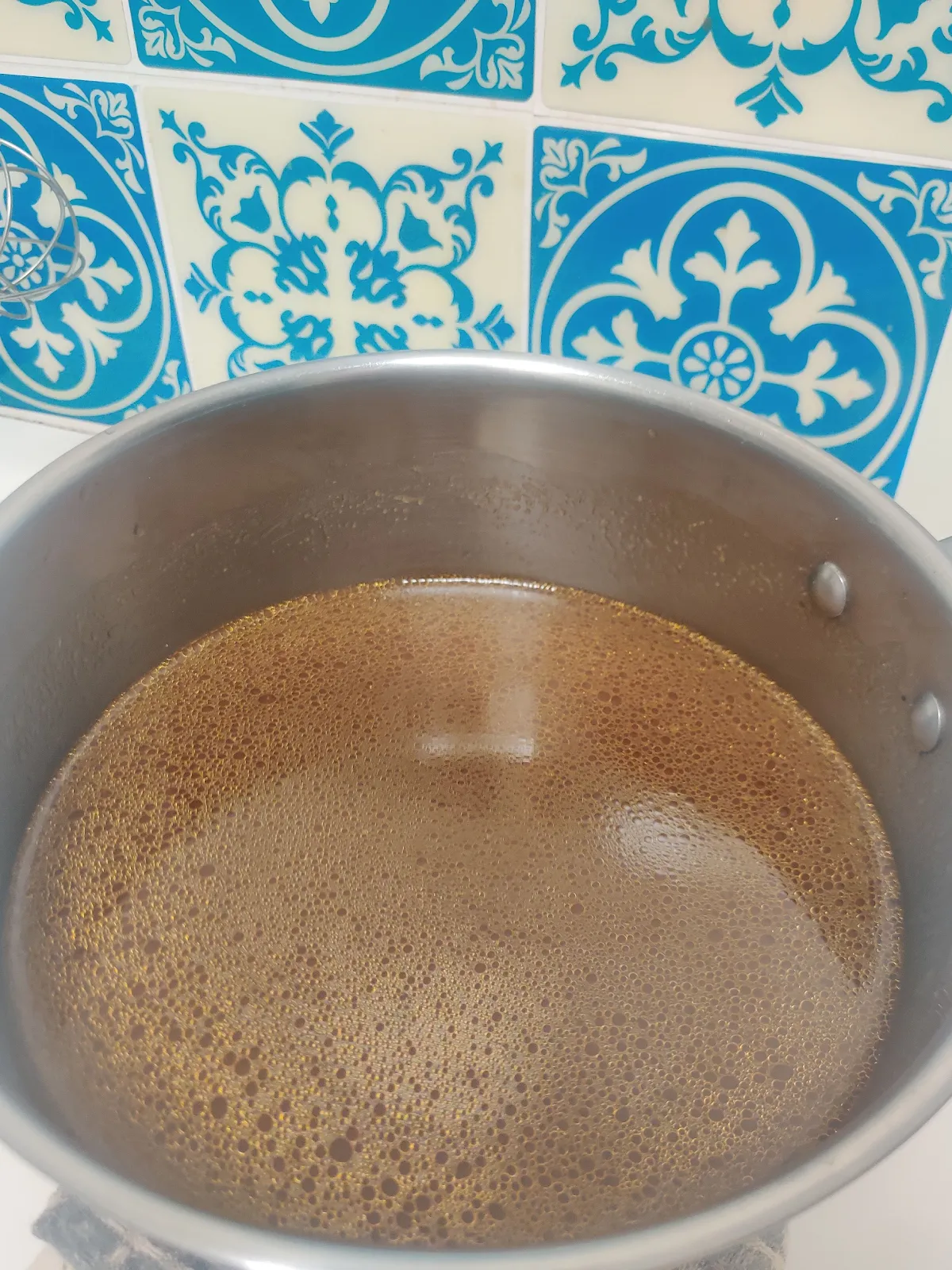

Anyway, what is it? This recipe is a brodo misto or “mixed broth” in Italian, and it’s a broth built on simmered chicken and beef together alongside a mirepoix and some aromatics.
Since this is a broth, it’s usually served as a main ingredient for dishes like cappelletti in brodo, lending incredible depth of flavour and body to complement tasty pasta. It can also be used for gravies like a stock, and again, it’s going to lend a far better flavour than bouillon cubes ever could.
Speaking of bouillon cubes, this recipe is great for freezing, and you can freeze them in an ice cube tray then stick them in a freezer bag. Healthy homemade bouillon cubes without the MSG and preservatives!
Ingredients in chicken & beef broth
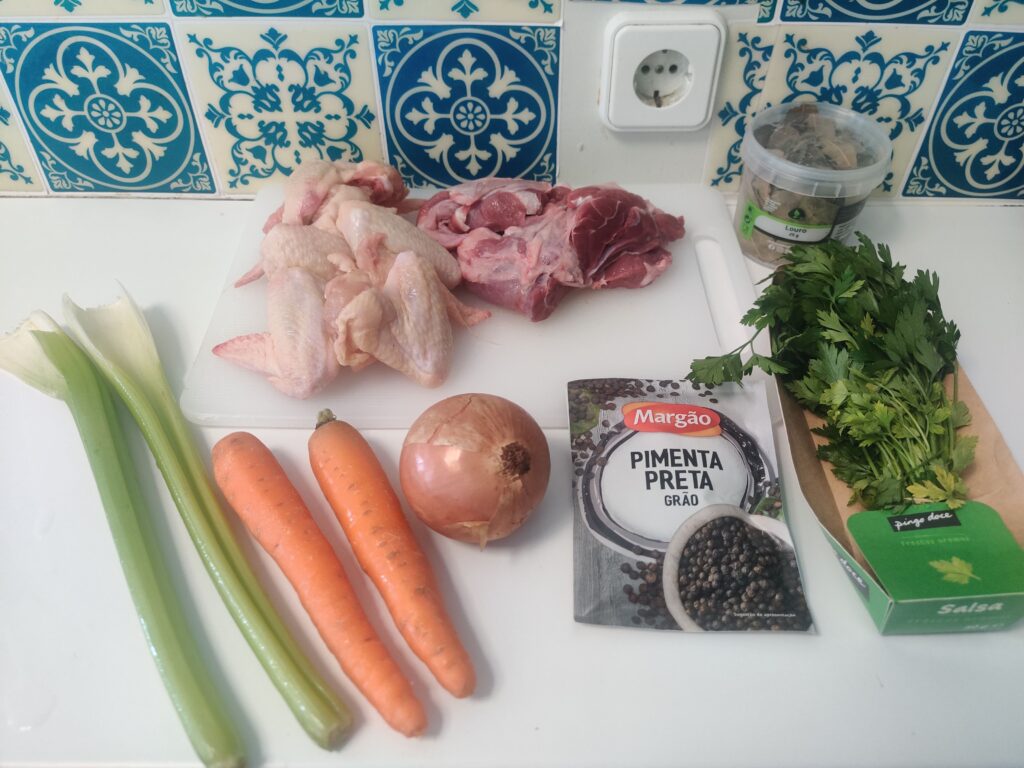
A good chicken and beef broth will naturally have chicken and beef, usually low-quality cuts with a good mix of bone, connective tissue, and some meat. We’re adding a mirepoix and a couple of aromatics to this recipe.
- Chicken: use whatever has bones and joints for deeper flavour and its collagen. Necks, wings, thighs, drumsticks, and feet, or simply a whole chicken will give you a great broth. Save the breasts for a nice meal; they aren’t ideal for broth.
- Beef: again, look for cuts with good connective tissue and bone. Beef shank, oxtail, and bone-in short ribs are good, and bone-in chuck is an okay substitute. Don’t use a nice steak!
- Mirepoix: use coarsely chopped celery, carrot, and onion (with the skin on to deepen colour). Leeks are a great addition too, but don’t go overboard with the mirepoix. Try to limit it to about 20% of the weight of your chicken and beef at most. So if you’re using 2kg chicken and beef, aim for around 300g of mirepoix or 400g maximum.
- Aromatics: avoid adding too many herbs and aromatics to your broth if you’re making a big batch for several different recipes. Only bay leaves and whole black peppercorns are used in this recipe, but some cloves in your onions (pin them in) or juniper berries can add a nice touch. Only add salt if you want, or leave it out altogether so that you can control salt for future recipes using the broth.
What can I make with chicken & beef broth?
A good chicken and beef broth is pretty versatile. You can use it as a base broth for several recipes. Basically, anything that calls for a good meat stock, you can add this.
Here are just a few of the many, many recipes you can make with this broth:
- Cappelletti in Brodo, Tortellini in Brodo: one of the trickiest parts of making authentic cappelletti in brodo is making a capon broth. Gallina (hen) is good substitute, but this broth will work excellently. Of course, you can use it for its Bolognese cousin, tortellini in brodo to great effect. Either cook the cappelletti/tortellini direclty in the broth itself or cook in water then ladle this golden broth generously when plating.
- French Onion Soup: classic French onion soup should use beef broth, but a rounder chicken & beef broth can be a reasonable alternative.
- Sauce Chasseur, Jägersoße, Bratensoße, and Zwiebelsauce: gravies, pan sauces, and many classic sauces can all use this rich broth to lend depth and flavour.
- Cocido Madrileño and Sopa de Garbanzos y Chorizo: these Spanish favourites can benefit quite a bit from a good homemade mixed meat broth.
- Goulash Suppe and Austrian Beef Goulash: Hungarian and Austrian goulash often calls for a rich beef stock to help simmer down the wonderful paprika sauce and beef, so this broth can lighten up the flavour.
- Risotto: broth and wine are essential to a good risotto. While chicken stock is normally used, this broth can add body to a nice risotto.
Tips & tricks for homemade chicken & beef broth
A chicken and beef broth will take a little longer than a chicken stock or broth, because the beef needs more time to render down.
Patience is essential. For cappelletti in brodo, some households in Italy let it simmer for a whole 12 hours! You don’t need to take it that far, but the more you simmer it down, the more you get a “demi-glace” broth that’s intense in flavour.
My recipe calls for 4 hours, but I’ve done 6 hours to really extract every bit of flavour and the result is quite similar. Don’t rush it, give it time to come to a boil, and simmer it gently – a gentle “gloog gloog” with little bubbles, not an aggressive boil with big bubbles!
I’d recommend doing at least 4 hours to develop the flavours and to transmute your water into liquid gold, and I’d also recommend doing a big batch. This recipe takes time, but the result is a broth you can use for a dozen meals or more.
The two biggest tips I have are for clarifying the broth. Firstly, skim off the scum quite patiently during the first half hour of simmering. It should look quite cloudy and be easy to scoop up with your ladle; afterwards it starts to look like a thin film. Gently work it to a side with your ladle, then dip it in and scoop it out.
Secondly, refrigerating the broth adds a whole overnight step to the process. Once the broth has cooled, the fat should all rise to the top and it becomes much easier to scoop out.
Cloudiness doesn’t ruin a broth, it’s aesthetic. Of course, clean it up enough to get all the chunks out, but no need to obsess. If you absolutely must have a crystal clear broth, you should be looking up a recipe for consommé!
Lastly, be conservative with your aromatics and don’t salt your broth at all unless you know what you’re going to use it for and you know how much salt is needed. Season the broth whenever you’re making a recipe with it.
Description
This chicken and beef broth (brodo misto) is an Italian inspired broth used for dishes such as cappelletti in brodo and it can be used in most recipes that call for a rich meat stock. Your chicken and beef will simmer for 4+ hours with a mirepoix and a couple aromatics, resulting in a beautifully golden liquid broth ready for your favourite soups, gravies, and sauces.
Ingredients
Broth Base
Mirepoix & Aromatics
Instructions
Mise en Place
-
Wash then roughly chop the celery stalks and carrots, without discarding the ends. Chop onions into halves, keeping skin on for a deeper colour (optional). Chop parsley, including stems. Set aside in a bowl.
Optional: insert 2-3 whole cloves in the round part of the onions, and fry the onions flat-side down until slightly browned. -
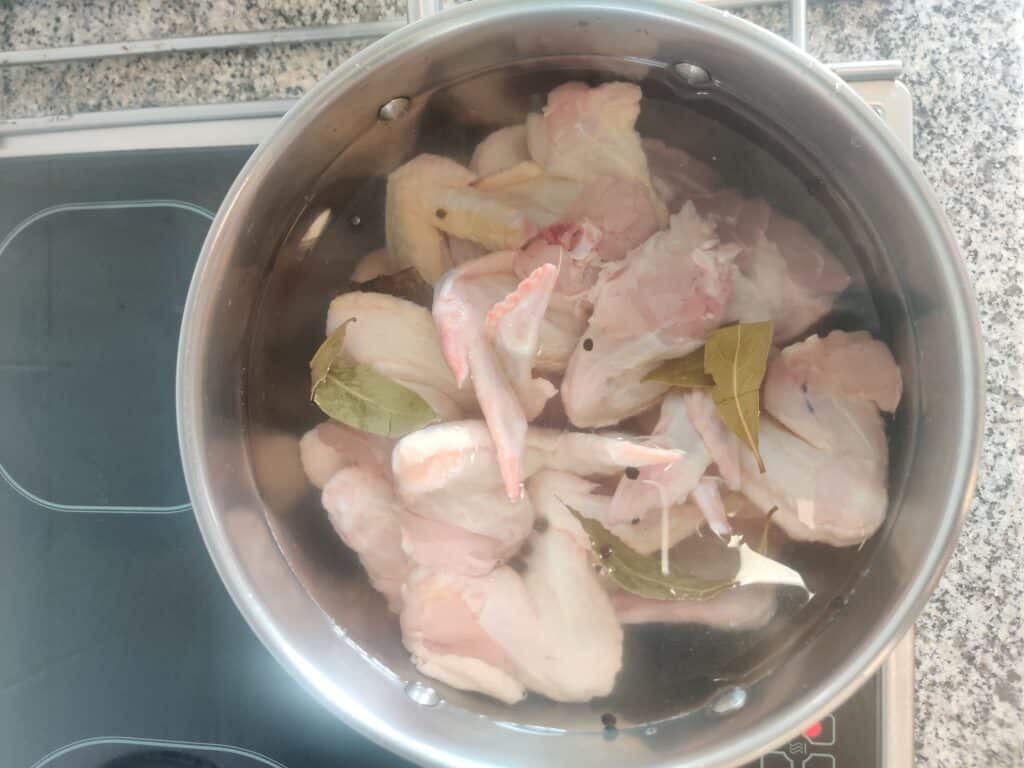
(Optional, depending on chicken/meat cuts): cut chicken and/or meat into large pieces, then place in a large stock pot. For chicken wings and beef shank, leave as-is.
Making the Broth
-
Fill up the stock pot with cold water until covering all chicken & meat, then pour more until it covers a few cm over.
Optional: cover with a heavy ceramic plate, upside down, to keep the chicken and meat submerged. -
Bring to a boil, then immediately reduce to a low, gentle simmer. Within the first 15-30 minutes, occasionally swirl the bottom of the ladle gently around the centre, towards the edges of the pot, then gather any scum and discard. Repeat this frequently to clarify the broth. It doesn't need to be perfect, but it will make your broth less cloudy and it's easier to do before adding the mirepoix and aromatics.
-
Simmer for 2 hours, occasionally skimming the scum from the surface.
-
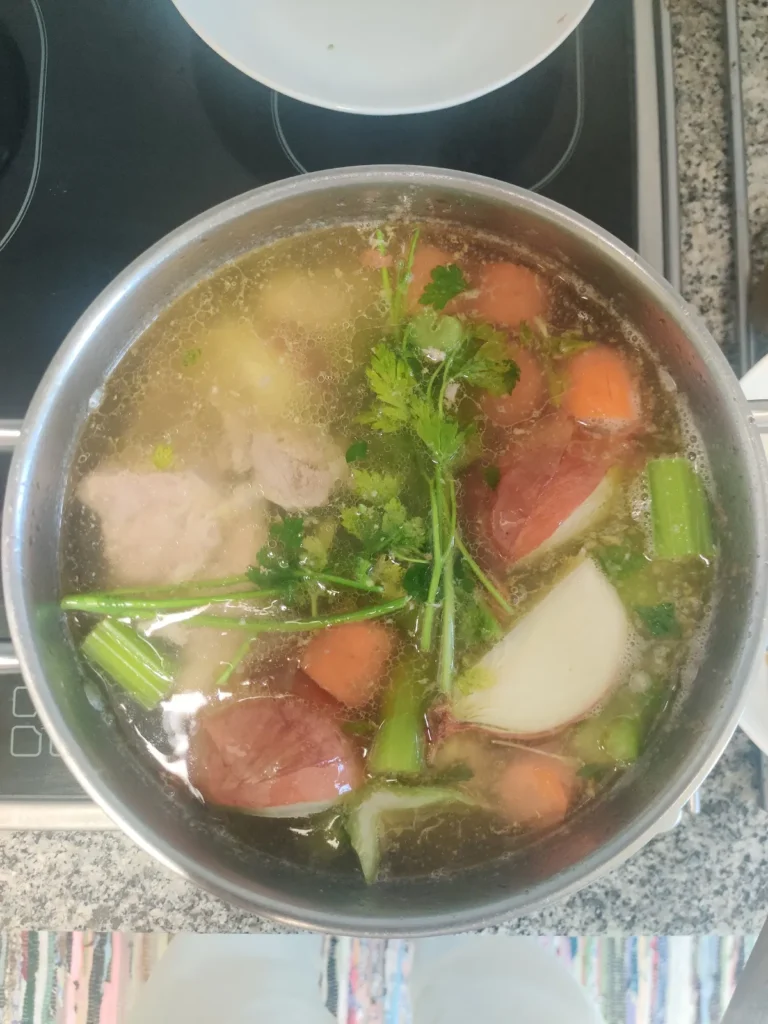
After 2 hours, add the mirepoix and continue simmering and skimming occasionally for 1 hour.
-
After 3 hours total, add bay leaves and peppercorns. Continue simmering for 1 hour.
-
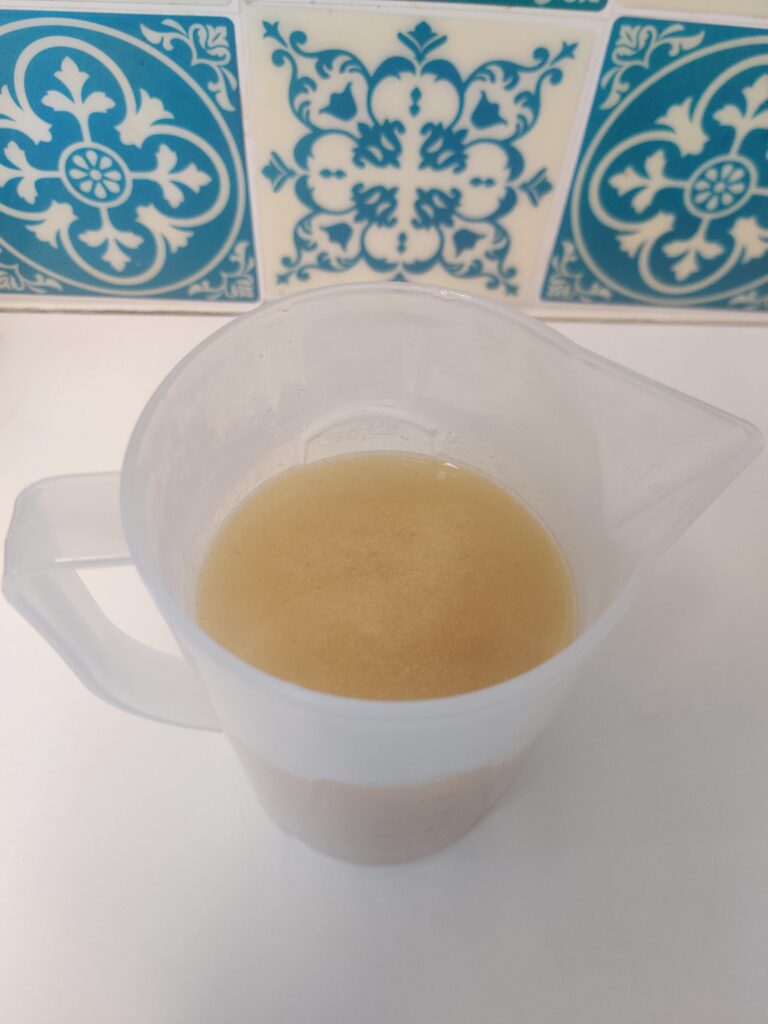
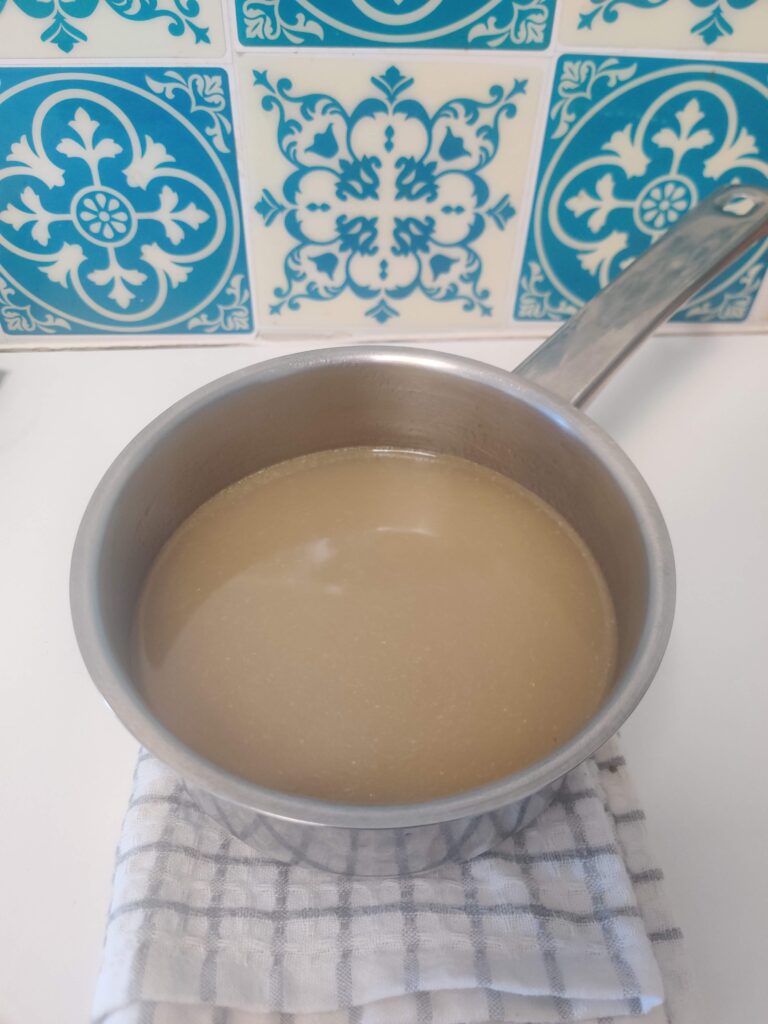
After 4 hours total, remove from heat and strain the broth into a clean container. Use a muslin cloth, chinois, or any strainer to separate the broth from the solids. All meat and vegetables should be bland and flavourless, so discard or compost.
If you simmered the broth for less than 4 hours, you could use the scrap meat if desired. -
After cooling completely, place broth in refrigerator overnight.
-
Remove chilled broth from refrigerator and use a spoon to skim off as much fat from the top as desired. Return to refrigerator until needed or reheat on the hob if using. Salt to taste and enjoy.
If your broth is jelly-like, it's because you used meat cuts with high collagen. It will liquify again when heated.
Note
- Storage: Keeps refrigerated for up to 4 days in an airtight container. Can be frozen for around 6 months. Pour into ice cube trays, then remove frozen cubes and place in a freezer bag for easy portion sizes.
- Clarity: to reduce cloudiness, be extra attentive during the first 30 minutes of simmering. Gently skim the surface and remove scum often. Skim any remaining fat after refrigerating the broth overnight. Avoid stirring and strain the broth gently.
- Thickening/Thinning the Broth: if your broth is too thin, simmer for longer. If your broth is too thick, add a little hot water at a time until it has a satisfactory consistency.