
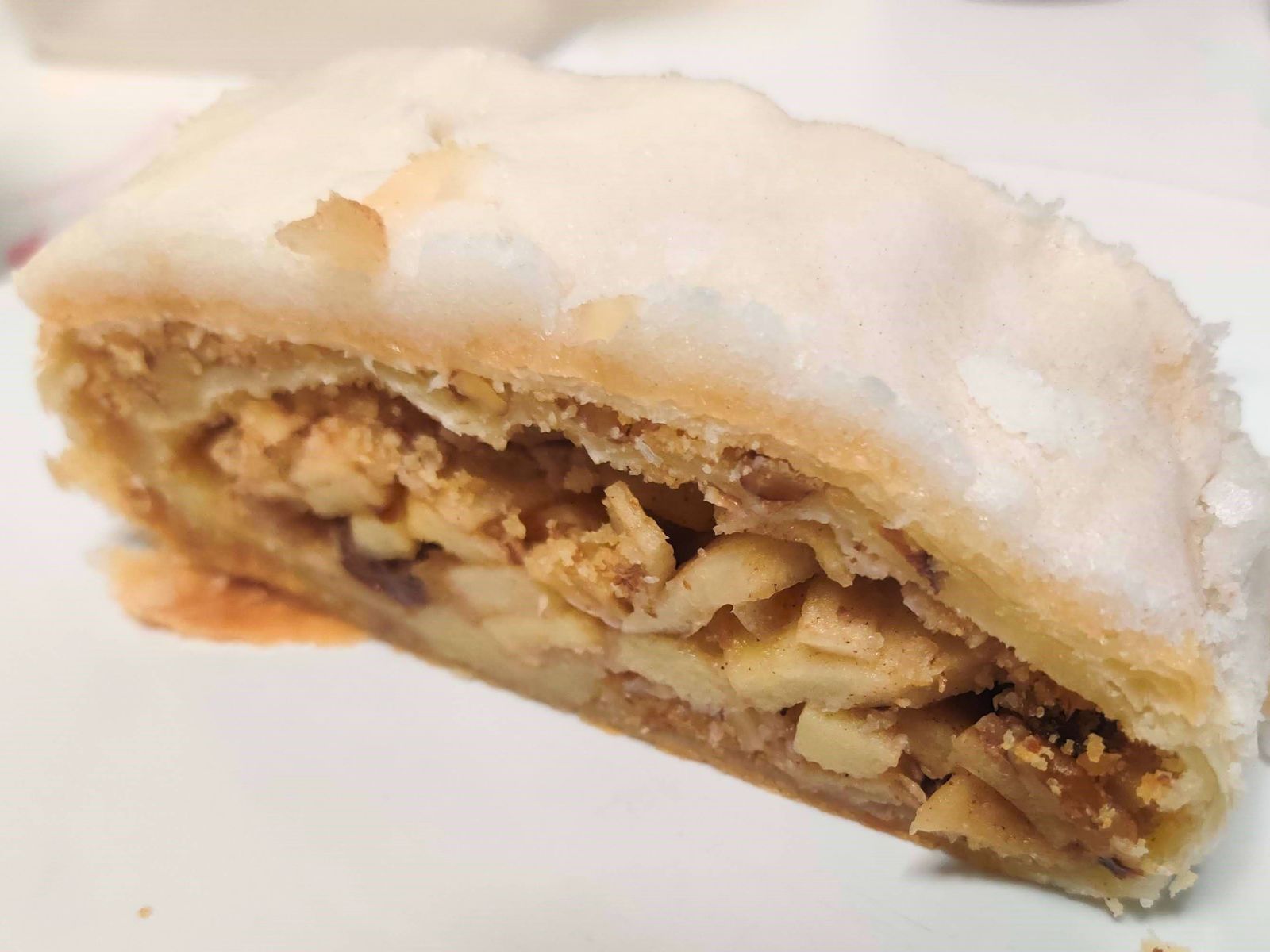

Fresh alpine air, strolling through a Salzburg Christkindlmarkt (Christmas market), and apple strudel – these really are a few of my favourite things. Austria’s most famous pastry, the Apfelstrudel (apple strudel) is a wonderful dessert consisting of apples, cinnamon, raisins, and a flaky dough baked until crisp and served with coffee. When I lived in Bavaria, this lovely pastry was one of my favourites – mostly because I love apples – and I’m certain you’ll love this home recipe.
Authentic apple strudel vs my homemade recipe
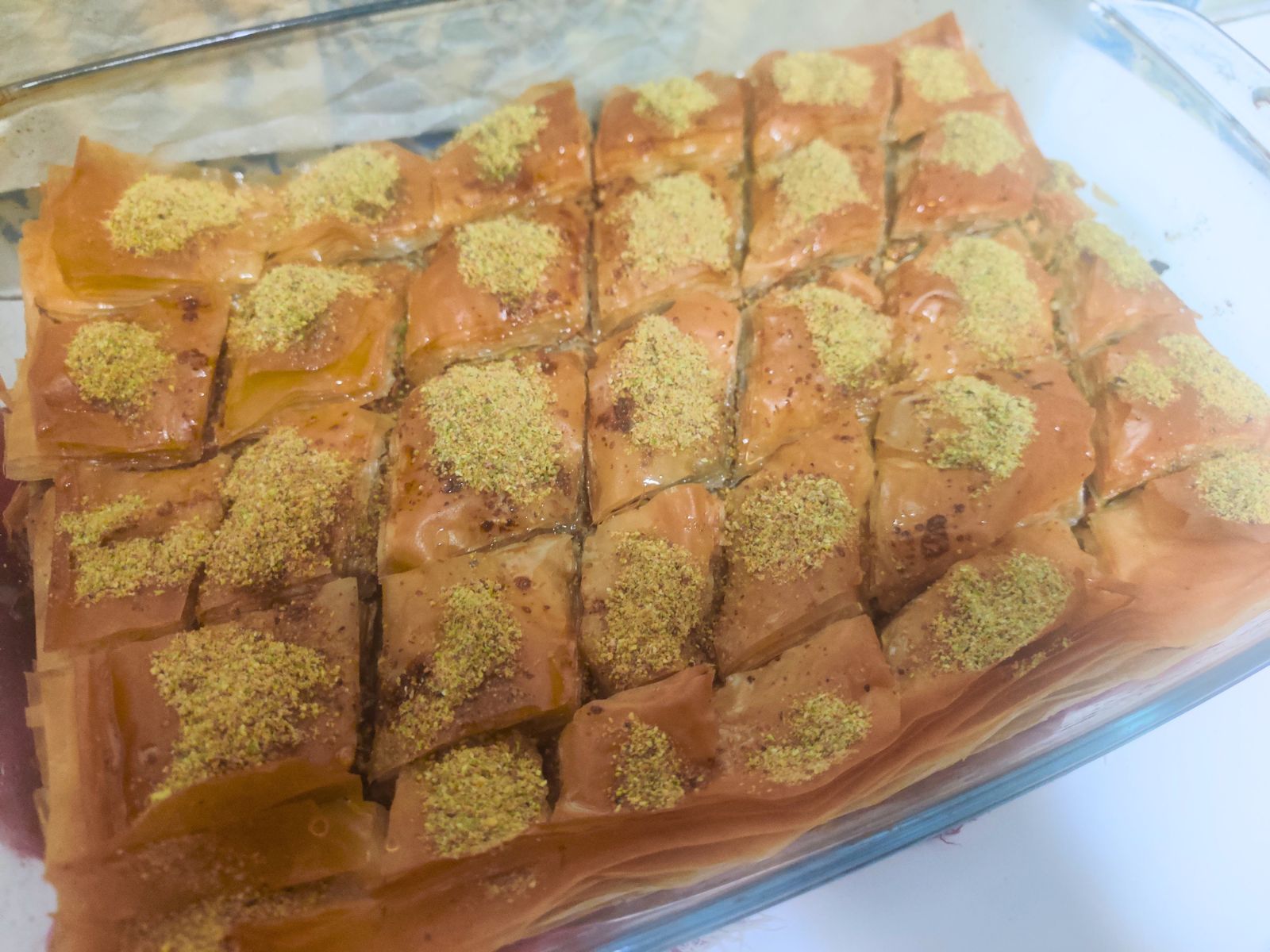
Apparently the Apfelstrudel (Apfel “apple” + strudeln “to whirl/twist”) recipe is recorded in a Viennese manuscript dating back to 1696, and it’s claimed that the method of filling filo pastry with nuts, honey, and local ingredients is directly connected to Turkish pastries like Baklava. Centuries of Ottoman conquest in the Balkans, to Hungary, and eventually almost Vienna itself brought this method of pastry-making to parts of the Habsburg and later Austro-Hungarian Empire, where apples were used rather than ingredients like pistachio.
I was inspired to make this for myself by Kristin from Bake Across Europe. Her version uses freshly made dough that is supposed to stretch so thinly across an entire table that a newspaper can be read underneath. If you really want authenticity (how an apfelstrudel is traditionally made), then I’d highly recommend following her method rather than using store-bought dough.



The “authentic” version is a little hard to pin down in terms of filling. Some say it must have walnuts, others say it shouldn’t have any butter at all. The only thing I can take from this is that a truly authentic apfelstrudel recipe must use homemade dough that is unleavened, kneaded laboriously, whacked on a big dinner table a few times to work out the gluten, then stretched paper-thin.
What goes in an apfelstrudel?
As I’ve touched on, an apfelstrudel can have all manner of ingredients depending on who you ask. Naturally, you can’t go without apples, and apples really belong with cinnamon, but what else should you put in yours? Here’s what I’m using and some additional ingredients you might like in yours:
- Apples (Äpfel): the namesake of the recipe, your apples should be tart and crisp. Best varieties to use, in my opinion: Granny Smith, Braeburn, and Golden Delicious. Make sure the apples are sliced very thinly, about 3mm.
- Breadcrumbs: the reason we use breadcrumbs toasted in butter is so that when the apples begin to cook and release their water content, it gets absorbed by the breadcrumbs and keeps the strudel firm and dry. Spread the breadcrumbs well over the entire surface of the dough so that when the strudel is rolled up, any escaping water doesn’t make it past the layered breadcrumb layers.
- Seasonings: cinnamon is an obvious addition here, since it just pairs perfectly with apples. Nutmeg and cloves can be good for more of a “Christmas” flavour (like Lebkuchen, or gingerbread cookies). Lemon zest or even a splash of lemon juice can really round out the flavour profile nicely.
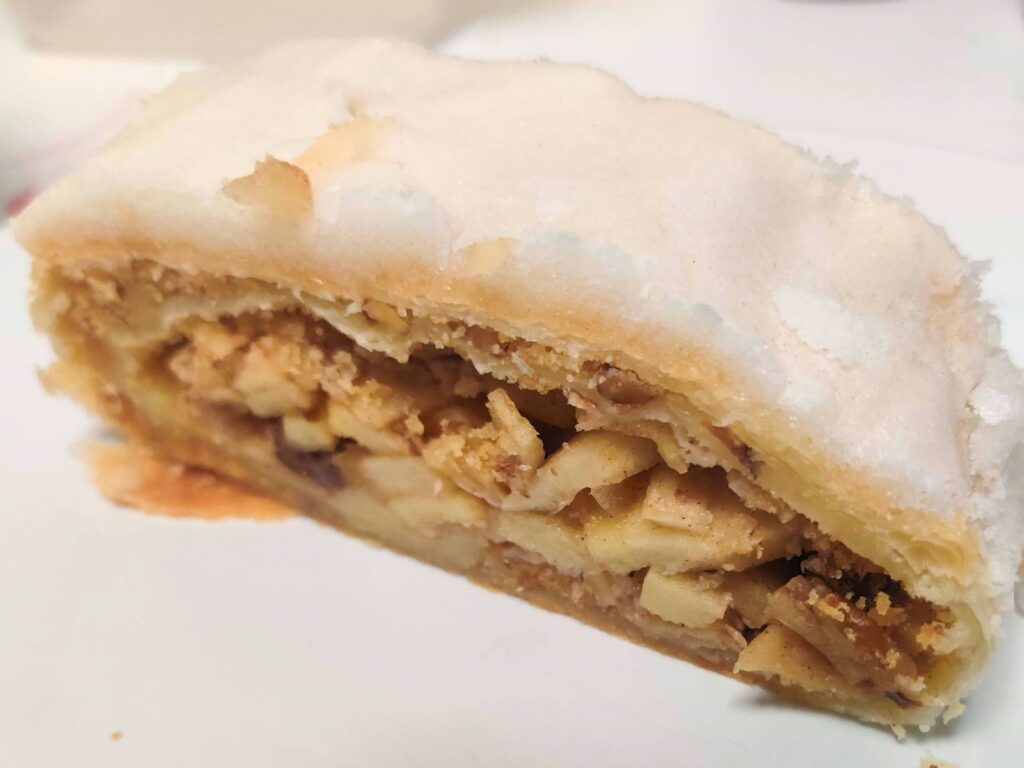
- Sugar: refined sugar would have been quite the luxury in late 17th-century Vienna, so I’m willing to bet the original recipes used honey as a sweetener. You can too, but I just used sugar – both brown and white. Brown sugar gives it a cosy flavour, but just use plain white sugar instead if you want. Powdered sugar is traditionally used to finish the strudel, but I’ve gone with a heavier and sweeter icing (it looks much thicker in the photo than in real life when sliced).
- Butter: use unsalted to control for salt. That being said, just a pinch of salt can be nice to add back in. Melt it on the hob or just put the tub in the microwave for 20 seconds or so.
- Fruit & Nuts: rum-soaked golden raisins really add a nice touch, and I’d vouch for them over dark raisins. Walnuts are a nice addition too. Just chop them roughly and add them to the apple mix.
- Filo Dough: a traditional apple strudel recipe’s hardest step is working the dough across an entire table and stretching it so thin you can see right through it. I’m using shop-bought pastry and it’s obviously easier, but if you’re good at working dough and want the authentic flaky pastry make it yourself.

Tips & tricks for a delicious, easy apfelstrudel
Your choice of apples is what really makes or breaks this recipe. Soft cooking apples can still be used, but you’ll likely get a mushy applesauce and a soggy strudel. Tart, crisp apples with a good texture will give you a far better strudel. You don’t have to peel the apples, but doing so will give them a nicer texture. Avoid cubing or dicing the apples, go the traditional route and slice them thinly, about 3mm.
When mixing your apples, sugar, cinnamon, drained raisins, lemon zest, and any other filling ingredients, let them rest for about 20 minutes. The apples’ water will start to come out. Remove the filling and discard this water so it doesn’t end up sogging up your strudel.
Baking the strudel is the easiest part, but do a double check before putting it in the oven. Make sure the seam side is on the bottom and seal it with your fingers or a fork. Use an egg wash on the top for a nice crispy sheen. Remove the strudel from the oven when it’s a nice golden colour and let it rest. It should come out flaky, especially if the dough is homemade but even if it’s shop-bought filo.
Last but not least, try your hardest to refrain from digging in straight after it’s come out of the oven. Let the strudel rest for at least an hour, ideally a few hours.
✅ Pro Tip: Let your apple mix rest and drain out any water to avoid the “soggy bottom blues” of a wet strudel. An Guadn and Guten Appetit!
Description
Apples, cinnamon, raisins, and buttery breadcrumbs all wrapped in a flaky pastry topped with icing sugar. An Austrian apfelstrudel is the perfect companion to a nice cup of coffee. Enjoy this twist on a Viennese café favourite with this easy apple strudel recipe.
Ingredients
Dough
Filling
Topping
Instructions
-
Soak raisins in a bowl of rum or warm water for about 20 minutes.
-
Melt 30g butter in a frying pan over medium heat. Fry breadcrumbs for about 4 minutes or until golden and sand-like in consistency. Set aside.
-
In a separate bowl, mix sliced apples, granulated sugar, cinnamon, lemon zest, and dried raisins until incorporated.
-
Over a clean cloth or directly above vegetable paper, lay out the filo sheets and brush melted butter evenly over each. Leave a few tablespoons of melted butter for later.
-
Evenly spread the toasted breadcrumbs across both sheets, leaving a border of about 5cm on all sides. On one of the shorter sides, spread the apple mixture from end to end with about a 5cm margin on either end.
-
Fold the long sides over the apple mixture, then fold the short side nearest to the apple mixture. Using the cloth or sheet, lift up and roll from the side with the apple mixture once. Check the sides and tuck in again if necessary. Continue rolling until your strudel is log-shaped. Tuck in any ends and use a fork to seal the end of the pastry.
-
Transfer directly to a baking tray lined with vegetable paper. Brush remaining melted butter on top of the strudel.
-
Bake at 190°C for about 30-35 minutes or until golden.
-
Remove from oven and let cool for 15 minutes.
-
In a separate bowl, mix icing sugar with lemon juice and whisk until consistency is nice and thick. Add a little more lemon water to thin out the icing, if necessary.
-
Allow icing to set, then serve.
Note
- Storage: keep at room temperature for about two days, or keep in an airtight container in the refrigerator for up to 3-4 days.
- Variations: there are many common variations, especially whether or not to use nuts (usually walnuts) or raisins, or whether to use additional seasonings like nutmeg and/or cloves. Add or remove to your liking, but always have the apple, sugar, and cinnamon at a minimum.
- Pairings: whether in a Viennese café or at home, a slice of apfelstrudel goes brilliantly with a cup of coffee and a scoop of vanilla ice cream.
