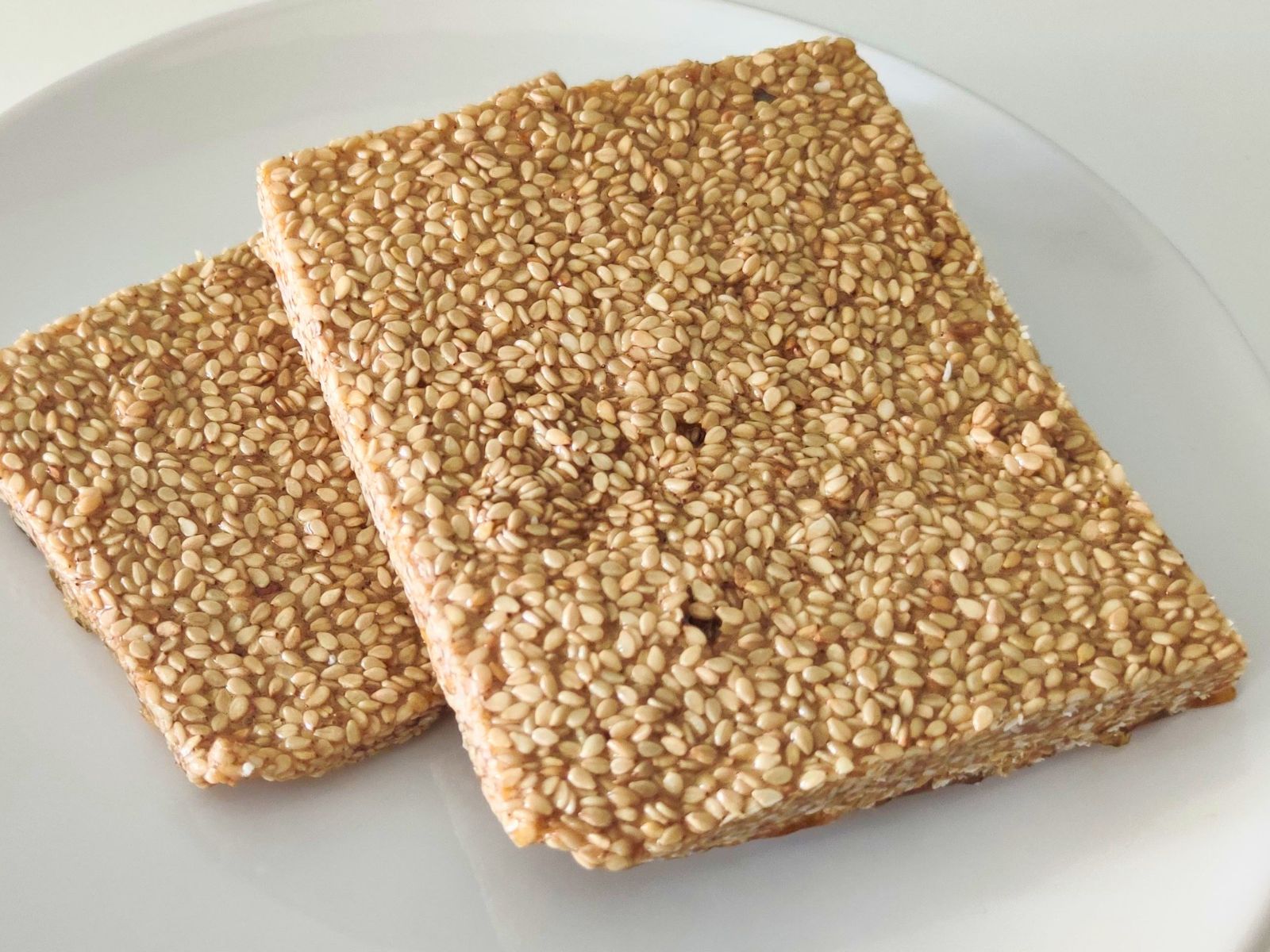

Super simple, tasty, and healthy, pasteli are essentially the same as Greece’s ancient sesame and honey bars dating back not centuries, but millennia.
An ancient and modern Greek treat
As a casual fan of both ancient history and Tasting History with Max Miller, where I was inspired to make this ancient hoplite ration for myself, I must say this recipe is about as easy as it looks and as tasty as it sounds. Pasteli just has two main ingredients, and the modern Greek version simply adds a couple of nice touches to round it out. I’ve made both the ancient and modern versions; both are excellent and not too different to my taste buds.
The modern Greek pasteli is at its heart an ancient recipe, probably as beloved in homes and the agora of classical Athens as it is today across Greece. One can imagine being a hoplite on the march to battle, keeping some dry ἴτριον (itrion) in a pouch for some quick energy along the way. “Ancient Red Bull,” or so I’ve heard it called!


The secret to a good pasteli: ingredients and candy stage
There are only two key ingredients in a pasteli, so they ought to be good quality for a good pasteli. But what a lot of home cooks might get wrong with this simple recipe is the temperature needed to get it nice and firm but not too crispy when it cools and hardens.
Careful temperature control is necessary since technically we are boiling the honey to a hard ball candy stage, which means that as it cools and hardens, it will remain firm but still be chewy. If the pasteli doesn’t make it to that stage, it’ll be too soft, or worse, it’ll just be runny honey with loose sesame seeds. If you blow past that stage, however, you’ll end up with a brittle that’s as pleasant on the teeth as hard tack.
Here’s what you need for a good pasteli:
- Honey: use a good honey, preferably from a local beekeeper or at least something in a glass jar. The better the honey’s quality, the better the pasteli.
- Sesame Seeds: use plain light sesame seeds, the same you’d use for making tahini sauce. Little specks of dark sesame seeds can give it a nice look, so you could use a blend if you really wanted to. They need to be toasted, not burnt, so light sesame seeds will visibly show you when they’re ready as they brown and you detect a nutty fragrance.
- Salt & Lemon Zest: I don’t know if the ancients used these and they’re not even necessary, but they are used in most modern pasteli recipes. A pinch of salt and the zest of one lemon do help the flavours come out a little more.
- Additions: you can feel free to add all sorts of wonderful things to your pasteli if you like. Pistachios and almonds can make pasteli more like what you’d find in a granola bar, and you can add a little touch of cinnamon too, if you like.
How to serve pasteli
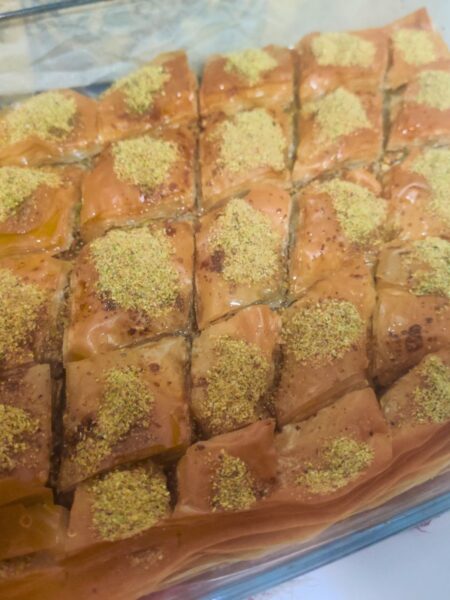
Pasteli is quite easy to serve – just let it set and then portion it out. Make sure you slice it into the desired shape as soon as possible before it hardens, though. Popular shapes are rectangles, squares, diamonds, and trapezoids (almost like a piece of Baklava).
It’s sometimes presented on a lemon leaf, which looks fantastic, and the leaf itself has a pleasant citrus aroma.
The honey makes pasteli quite a great source of energy, so you probably won’t need to accompany this with a coffee. Just eat it as-is and let it tide you over until your next meal. You’ll often see pasteli sold at little kiosks in Greece, and they’re eaten especially during Lent or other days of fasting.
✅ Pro Tip: Wet a sharp knife and cut the pasteli into the desired shape quickly, whilst it’s warm. It will become brittle and break apart if you try cutting it later as it hardens.

Description
A traditional Greek pasteli is simply a honey & sesame bar with a pinch of salt and lemon zest to round out the flavours. It's ancient, it's simple, and it's quite easy to make as long as you use good honey and hit the correct temperature for the pasteli to set properly.
Ingredients
Instructions
-
Over high heat, toast sesame seeds in a frying pan for about 2-3 minutes until fragrant and browned. Pour into a bowl and set aside.
-
In the same frying pan, bring honey to a boil. Allow it to boil for about 4-5 minutes. Reduce to medium heat.
The honey must reach 125°C/260°F. See notes for more details. -
Add a pinch of salt to the honey, then pour in the toasted sesame seeds. Stir over medium heat for about 2-3 minutes. The pasteli mixture should thicken considerably and become very sticky as you continue stirring.
-
Remove from heat then add lemon zest and stir until incorporated.
-
Line a baking sheet or tray with vegetable paper and immediately pour in the pasteli. The mixture should already be quite sticky. Place more paper on top and use a glass or cup to roll over and smooth the pasteli to about 0.5-1cm thickness, as desired.
Greasing the vegetable paper with butter or oil can make it much easier to remove once it cools. -
Once smoothed, remove the top paper and use a wet, sharp knife to slice into the desired shape (rectangular, diagonal, or trapezoid). Allow to cool at room temperature for at least 15 minutes.
-
Separate the cooled pasteli bars and enjoy. Serve over a lemon leaf for a nice traditional touch.
Note
- Storage: store at room temperature for about 2-3 weeks, or keep in a dry, cool place for up to about 1 month.
- Candy Stage: the desired sugar stage is hard ball, or 121 to 129°C (250–265°F). A candy thermometer can tell you exactly when your honey has reached this stage, after which you can safely begin incorporating the sesame seeds and completing the recipe.
- No-Thermometer Test: without a candy thermometer, it's possible to know you've reached the hard ball stage by dipping a teaspoon of the honey into a glass of cold water. Let it cool then use your fingers to roll it into a little ball. When removed from the water, the ball should turn hard. Tap it on the countertop; that's what the pasteli's finished texture will feel like. If the honey breaks apart, it still needs time to reach a higher temperature.