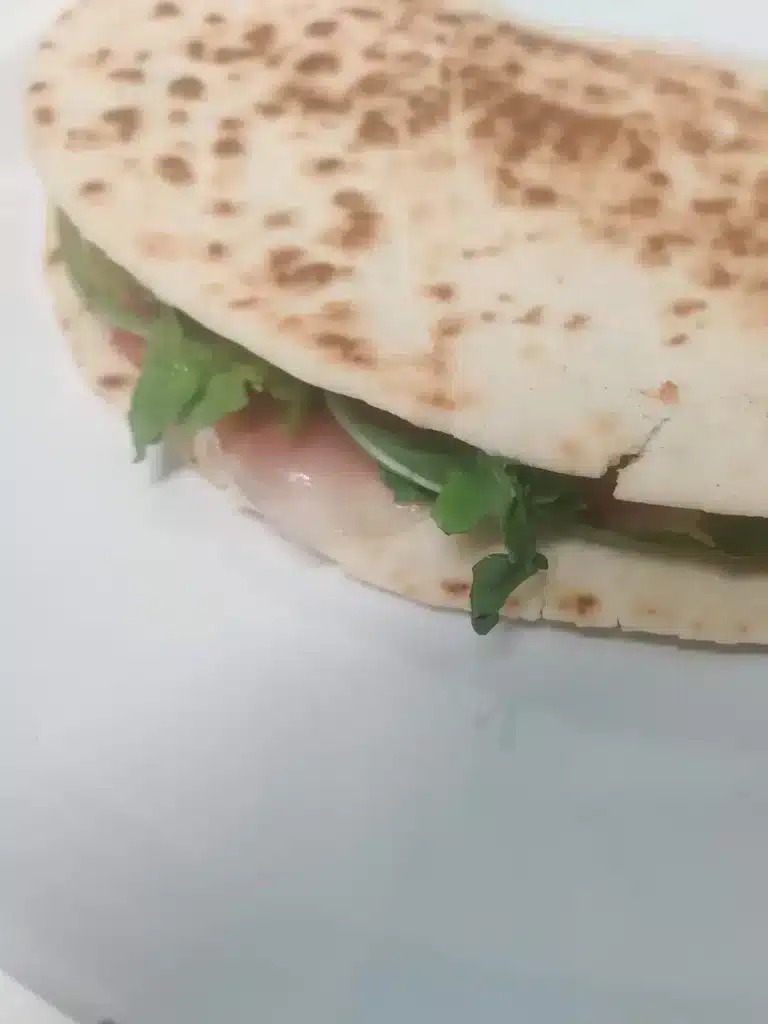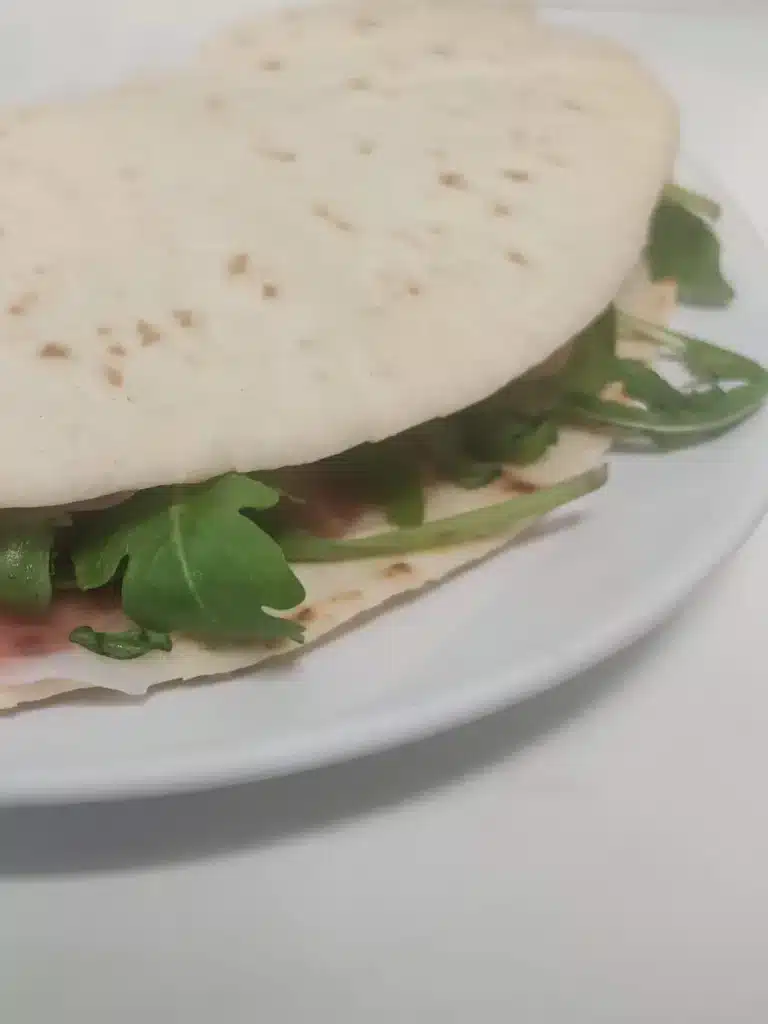
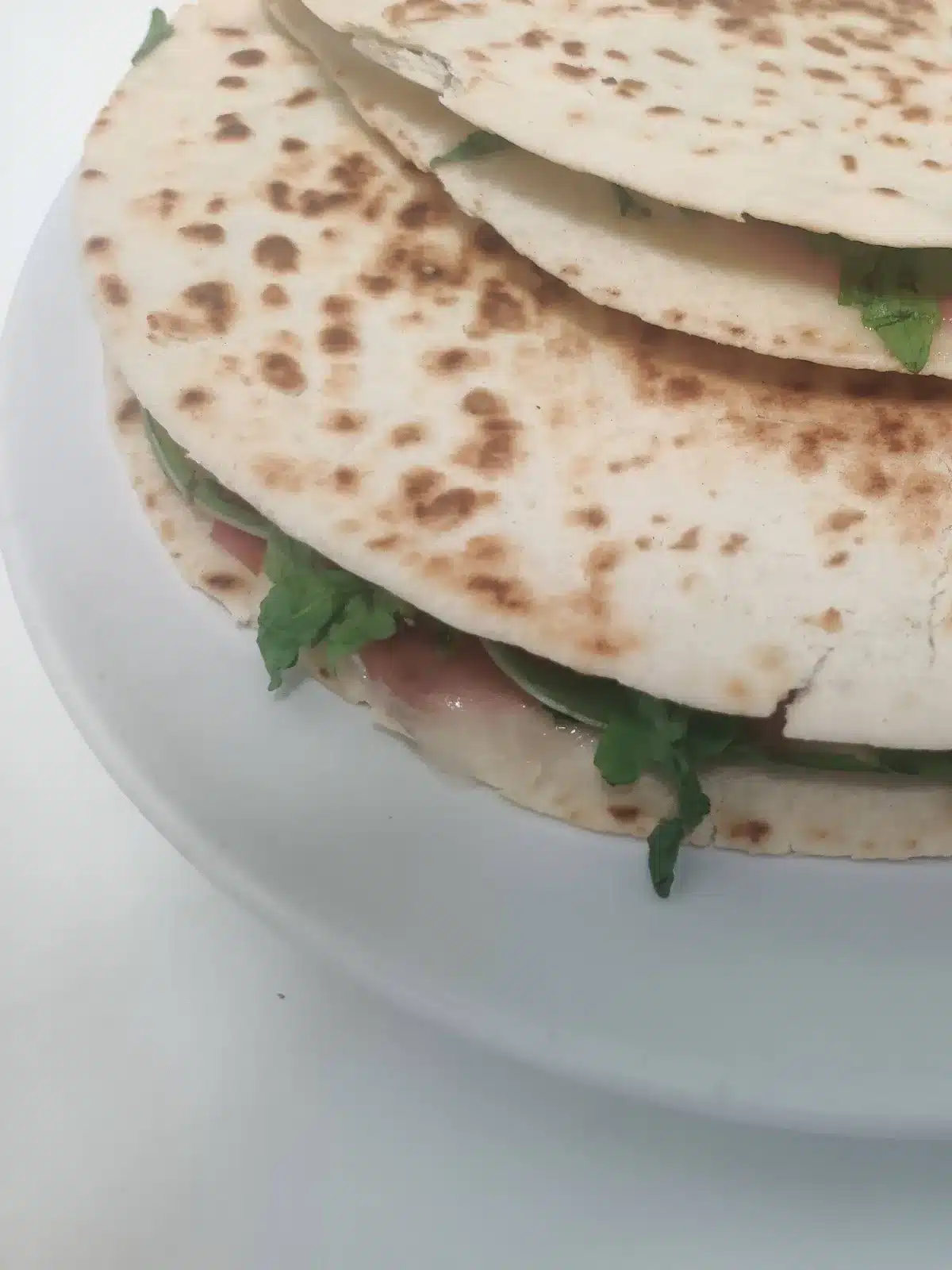


Hello again there, folks. Italian street food and quick & easy home cooking should be healthy and reasonably affordable, and the humble piadina is sure to hit the spot.
What is a Piadina?
Piadina (sometimes piada, historically or in modern times) is an Italian flatbread made with 00 flour (doppio zero), water, salt, a generous amount of lard, and sometimes a pinch of baking soda.
This humble flatbread traces its origins to the northern Italian region of Romagna (today Emilia-Romagna) and was named by poet and scholar Giovanni Pascoli, an emblematic figure in this region and surrounding areas such as San Marino and the Marches.


As with many Italian recipes, the piadina has several regional variations from town to town, region to region. Forlì, Cesena, Ravenna, Rimini, and many other cities have their own lovely regional variations.
When studying Italian in Urbino (Marches), the piadina was a staple street food I often enjoyed alongside its “cousin,” the crescia sflogliata. For an evening snack, appetiser, or lunch as a student, this wonderful filled flatbread really did the trick.
Ingredients for a quick & easy Piadina
A piadina should only consist of the flatbread itself and its filling. Here’s what goes into a typical piadina:
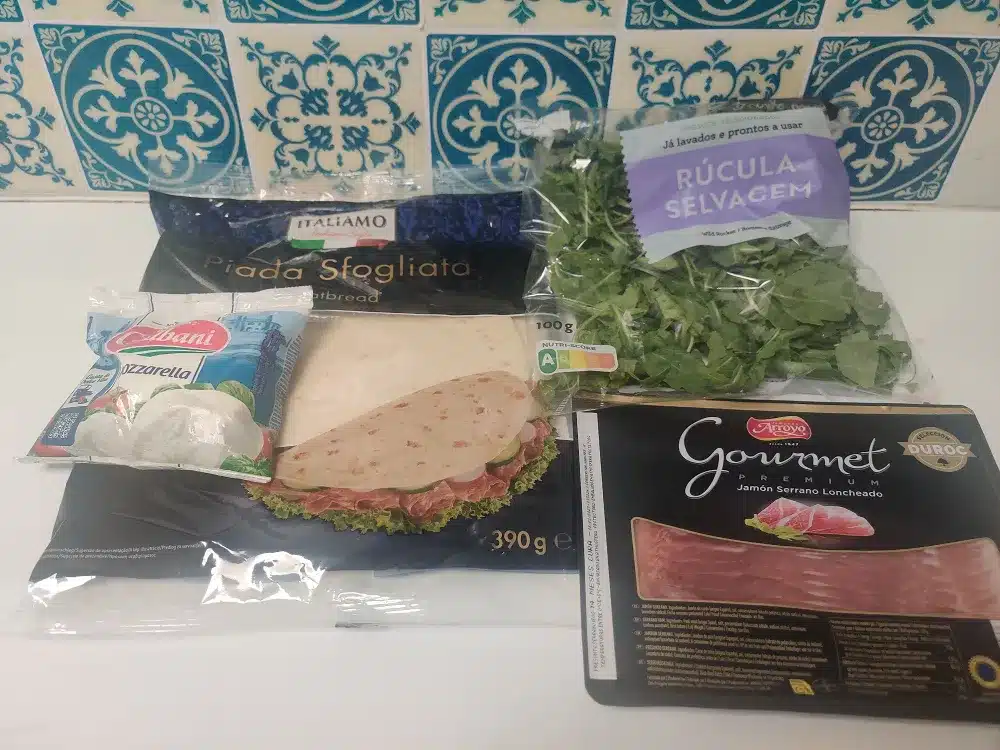
- Piadina: your flatbread can be homemade (best) or simply bought at supermarkets like Lidl (easiest). In Italy, you’ll sometimes see freshly made piadine that are rather thick (piadina romagnola) or quite thin (piadina riminese), as well as very thick flatbreads in the Marches (esp. Urbino) called crescia sfogliata. This recipe assumes you have shop-bought or freshly made piadine already.
- Fillings: the classic piadina romagnola is filled with squacquerone cheese, prosciutto, and rocket. I’ve swapped the squacquerone with fresh mozzarella, since it can be rather difficult to find outside of its native Romagna.
- Variations: there are several regional variations, and piadinerie (piadina kiosks) will commonly sell them with a wide variety of fillings, both savoury and sweet (e.g. Nutella and fruit). Use any combination of cured meats, sardines, vegetables, and/or leafy greens you prefer. Try to avoid using sauces or ingredients that become too greasy, however.
Homemade Piadina flatbread vs shop-bought
Within the European Union, the piadina romagnola has Protected Geographical Indication (PGI) status and the process of baking these lovely flatbreads and the ingredients that should go into them are taken quite seriously – and for good reason. Homemade or authentic fresh piadine will always beat out shop-bought piadine, hands down.
Packaged piadine at shops such as Lidl often contain yeast (it’s supposed to be unleavened!) and use food alcohol preservatives, but the rest of the ingredients ought to be normal. You’ll save yourself some messy hands and a little time by buying these, but in exchange you lose out on freshness and quality.
In brief, make your own flatbreads for the authentic experience. If you simply want a quick 5-minute lunch, use this recipe and add your favourite fillings.
Tips & tricks for a tasty Piadina
With shop-bought piadine, all you need to do is heat up the flatbread and add your ingredients, so it’s your ingredients that will make the difference in quality.
Generally, try to stick with cured meats, cheese, and vegetables. Don’t overload it, and don’t add sauces because they’ll just drip out and make a mess.
Piadina is a common street food and it’s supposed to be crumbly, so use ingredients that’ll stay inside as you eat it.
If you like your cheese melted and your ingredients warmed up a little, add the filling, fold over the piadina, and cook it for a couple minutes on each side in the pan.
Otherwise, simply add your ingredients fresh to the toasted piadina, fold over, and enjoy.

Description
This quick and easy piadina recipe with packaged piadine is about as simple as it gets. When you don't have time to make your own flatbreads, just use shop-bought piadine and fill it with whatever fillings you like. This recipe uses fresh mozzarella cheese, leafy rocket, and prosciutto similar to the authentic version from Emilia-Romagna.
Ingredients
Piadina
Filling
Instructions
-
In a large pan over medium heat, add one piadina and heat for about 2 minutes on each side. Remove from heat and plate.

-
Add your filling, either over half of the piadina or the entirety of the surface, then fold over and serve. Can be eaten as-is, sliced in half, or sliced into triangle portions.

Note
- Toasting with Fillings in Pan: traditionally, piadine are simply heated with ingredients being added fresh afterwards. You can also toast the piadina with filling, folded over, for a couple minutes on each side in the pan if you prefer melted cheese.
- Fillings: add whichever filling you like to your piadina. Just try to avoid any sauces or greasy ingredients to avoid making a mess.